
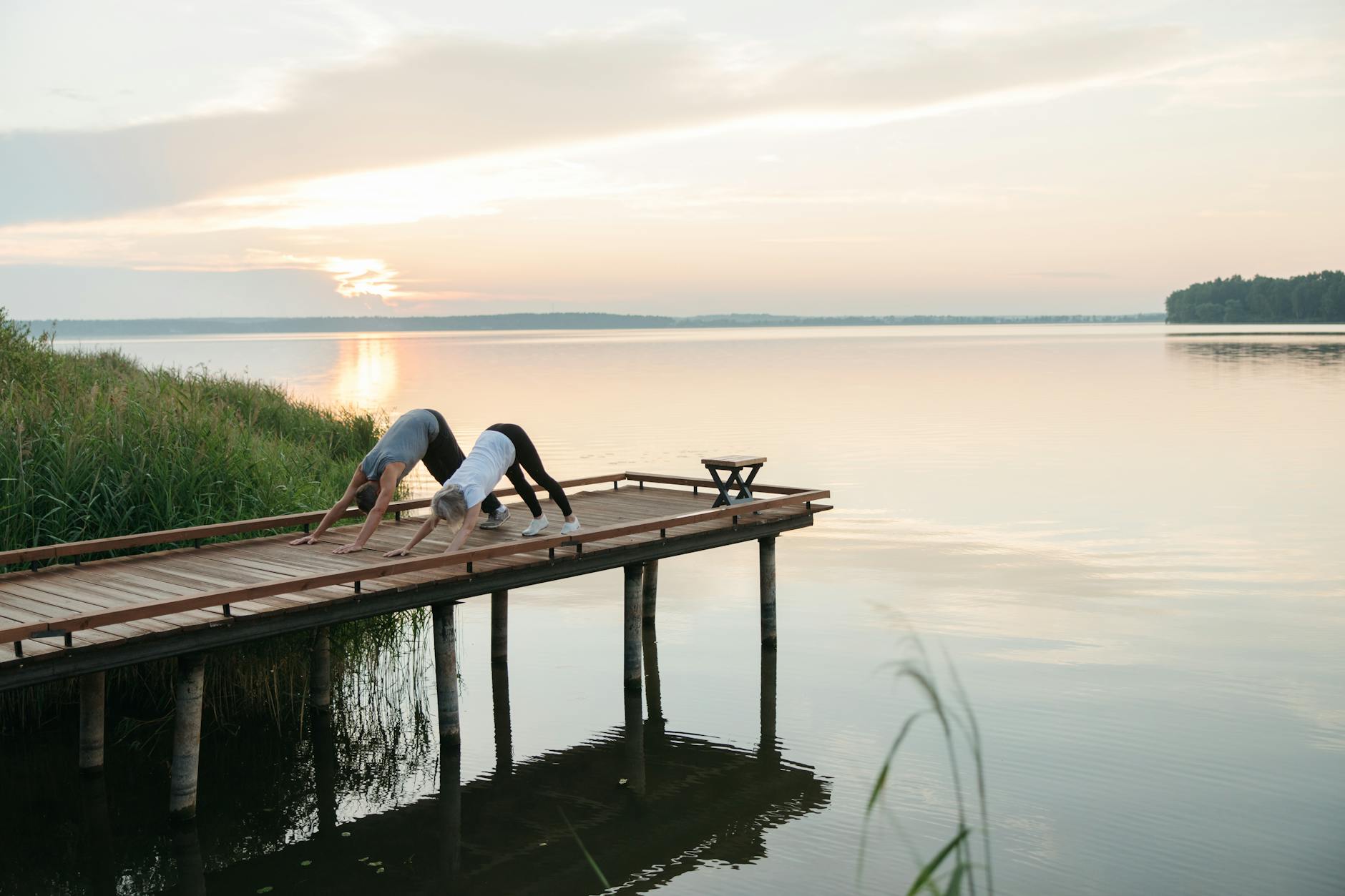
In today’s fast-paced world, many people seem to be drawn to yoga to seek something beyond fitness—something that offers a bit of calm amidst all the noise of daily life and of the world that we live in. For those who crave that deeper connection, gentle forms of yoga have become an especially welcoming path. Practices such as restorative yoga, hatha yoga, and chair yoga allow us to embrace peacefulness, and intention, inviting us to soften both physically and mentally.
As I have now begun to enter the world of yoga in a teaching capacity, learning to guide others in their yoga journeys, I am becoming more aware of how powerful gentle yoga can be. It is a practice that isn’t about pushing to achieve difficult poses but instead, it’s more about tuning in to our bodies, our breath, and our hearts. Gentle yoga meets you exactly where you are—creating a space where every stretch, every breath, feels like a way to return home to yourself.
The Growing Popularity of Gentle Yoga
Gentle yoga, which emphasizes slower, more nourishing movements and reflection over challenging poses, has seen significant growth in popularity. In addition, recent surveys indicate that around 50% of yoga practitioners in the U.S. practice yoga to relieve stress and relax, with many turning specifically to gentler yoga practices for this reason alone. This form of yoga allows practitioners to create a meaningful connection with themselves without the strain of difficult poses, making it a valuable and more accessible option for those who prefer a softer, more mindful approach.
For many, the appeal of gentle yoga lies in what it offers beyond the physical. These practices encourage us to check in with ourselves, moment by moment. The poses are simple and the pace is easier, yet this simplicity can be quite transformative.
Why People Choose Gentle Yoga
The reasons people turn to gentle yoga are as varied as the people themselves, but there are a few themes that seem to consistently emerge. Let’s explore some of the most common motivations.
1. Stress Relief and Relaxation
One of the main reasons people practice gentle yoga is for stress relief. When life feels like a never-ending to-do list, these slow, mindful practices allow us to pause and let go of the day’s weight. They invite us to slow our breath, ground our thoughts, and find a sense of peace that can be hard to come by.
2. Accessibility for All Bodies and Abilities
Gentle yoga is incredibly inclusive. Its slower pace and use of modifications make it accessible to people with a wide range of physical abilities, including those with conditions like arthritis, limited mobility, or past injuries. This inclusivity is what first drew me to teaching gentle yoga —knowing that I could potentially help others discover the heart and value of yoga, regardless of where they were starting from.
For those who are less drawn to high-intensity yoga classes, gentle yoga offers a comfortable space to explore our bodies without fear of pushing too far. It’s a practice that invites each of us to work with our unique abilities, and listen to our bodies as we place them into positions, instead of focusing mostly on those body positions.
3. Cultivating Mindfulness
Unlike practices that focus primarily on achieving specific poses, gentle yoga emphasizes the journey. It encourages us to pay attention to each breath and movement, while also being aware of how we are in the moment that we are practicing. This focus on mindfulness helps bring a sense of clarity and grounding to us in the moment that we practice, and teaches us how to move with more awareness in our daily lives.
In gentle yoga, trying to “perfect” a pose is less of a goal. I often remind my students that the shape of the pose doesn’t matter as much as how they feel within it. It is with each of the slow, mindful breaths that they take in throughout each gentle yoga class or session, that they’re able to reconnect with the deeper aspects of yoga – and themselves.
4. Fostering Long-Term Well-Being
Gentle yoga is as much about longevity as it is about today’s practice. Its movements are kind to the body, designed to enhance flexibility, strength, and balance without overworking muscles or risking injury. While guiding my students through gentle sequences, I become a witness to how this slower pace supports them in building a long-term practice that can sustain their wellness and well-being for years to come.
Gentle yoga acknowledges that every body is different, that every season of life brings new needs and limitations. It allows us to move in a way that feels sustainable and joyful -and in doing so, it fosters a deeper connection not only with the present moment but with our future selves.
The Transformative Power of Gentle Yoga
For so many, gentle yoga is more than just an alternative to intense exercise; it is a means of radical self-care. In the space between breaths and movements, there is room for healing, acceptance, and self-compassion. As someone who has walked the journey of mindful living and wellness, I see gentle yoga as an invitation to come back to ourselves. It is a practice that teaches us to honor our bodies, to appreciate each small movement, and to recognize that yoga isn’t a destination, but it may just very well be a lifelong journey.
If you’re considering yoga but feel intimidated by complex poses or fast-paced classes, know that gentle yoga is waiting to welcome you. It is clearly a “gentle” reminder that you don’t need to be flexible, strong, or young to experience the beauty of yoga. You just need a willingness to show up, move your body, breathe, and be present.
Sources
American Psychological Association. (2013). Stress in America™: Are Teens Adopting Adults’ Stress Habits?
Yoga Alliance and Yoga Journal. (2016). 2016 Yoga in America Study.
NIH. (2018). Yoga for Health: What the Science Says.
 Salubrity + Soul Yoga