
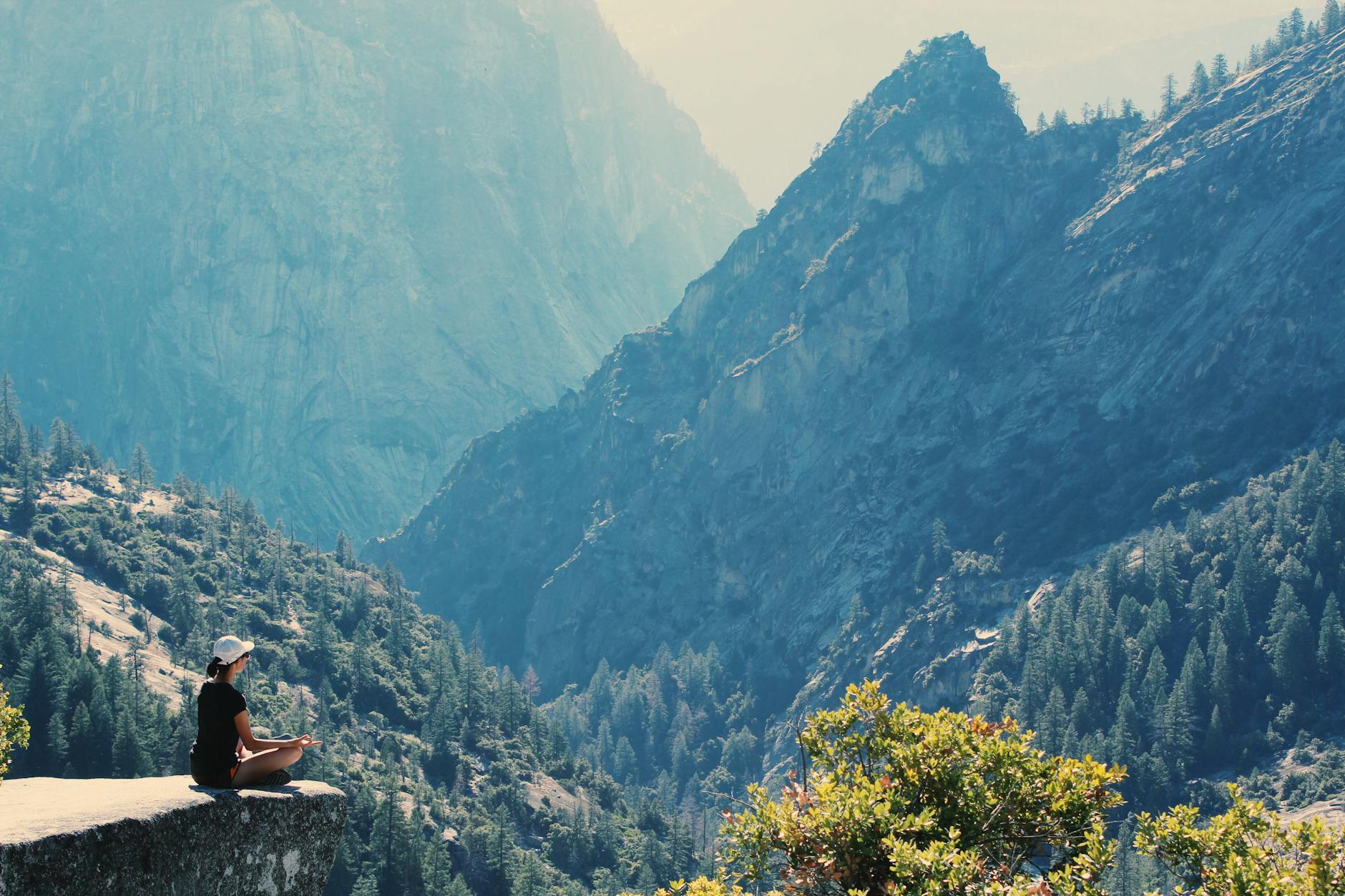
Have you ever noticed how, sometimes, whenever we hear the word “yoga” our minds tend to drift to lavish, serene studios, someone in a flowing posture, someone sitting in lotus pose or lying in a peaceful savasana? In 2025, I think we are now all more aware that yoga, in its truest form, is more than this. It is a sacred invitation to live with awareness and integrity. It is an invitation to practice as you are and in a way that resonates with your own yoga and life journeys. It is an invitation to practice in a way that helps you befriend your body. It is an invitation to unlearn a lot of the things that we have been conditioned to believe about yoga. It is an invitation to realize that yoga might also sometimes ask us to hold space for some uncomfortable truths surrounding yoga. And last, (but definitely not least), it is an invitation not just practice yoga, but to live it as well.
In this post, I invite you to explore the heart of living yoga. Yoga that steps off the mat and into the world at large. Yoga that breathes into the messiness of life. Yoga that does not look away from injustice, but instead courageously meets it with compassion, clarity and action.
The Hatha Yoga Pradipika promotes yoga as a physical, energetic and spiritual practice and teaches us that asana is not for flexibility, but for steadiness and meditation. While the Yoga Sutras of Patanjali remind us that the physical poses are but one limb of an eightfold path. This path also includes the yamas and niyamas, which are ethical principles that guide us toward non-violence, truthfulness and contentment, among other principles.
These teachings are not abstract ideals; they are practical, embodied values meant to shape how we treat ourselves and one another. Yoga has a way of asking us to look within and around ourselves, and to stay grounded in presence while opening ourselves up to both the burdens and the beauty of the world.
I have had a few experiences in my life that I could attribute to living my yoga practice. Interestingly enough, those moments were not within the confines of a yoga studio, or in a yoga space even, but instead were while standing with others in grief, injustice, fellowship, joy, simple moments of peacefulness, and when practicing stillness during times of conflict. There have been times when I have found yoga in the courage to speak up, or carry the weight of humility when someone needed me to listen deeply and without judgement, or when I have had to give myself the grace needed to hold space for my own healing – or someone else’s.
It is within these spaces that I have also found community, (and quite unexpectedly because sometimes yoga spaces can be somewhat competitive), but something really uplifting happens when people of all backgrounds, bodies and experiences come together to breathe, move, reflect and connect. It is in these moments that I am reminded that yoga is also relationships, connection and being conscious of humanness as a collective experience.
I’ve discovered that to live your yoga fully is to awaken yourself to our shared humanity and our responsibility to one another. It means acknowledging that systems of harm exist, and that we have a role to play in dismantling them beginning within ourselves.
A few ways that yoga and social justice intersect are when we practice ahimsa by speaking out against violence, oppression and wrongdoing. It is when we create inclusive, accessible spaces for all, and recognize that personal healing and societal healing are not separate – but delicately interwoven. It is when we honor the roots of yoga, acknowledging its South Asian lineage and resisting its commodification.
None of this is political. It is spiritual. It is the essence of karma yoga which is selfless action born from love.
Some of the ways that I have become accustomed to living my yoga are to use my breath and awareness to help ground myself in presence, as this helps me create the clarity that I need to carry out thoughtful, compassionate action. I also find myself reflecting more on on my values and my voice, and often ask myself “What do I stand for?” or “Where is my voice or action needed?”
I have also had to learn to be more present by educating myself and learning about things that I wasn’t aware of; especially from those who have lived experiences that differ from my own.
I had to learn to be more courageous about allowing my yoga to be in action. Whether showing up for communities, amplifying marginalized voices, taking part in an event. signing petitions, or volunteering in some other way. This is taking compassionate action.
Then there’s cultivating sattva (or creating balance and harmony) and understanding that a sattvic life does not avoid discomfort, but meets it with grace.
The embodied yoga practice is a sacred remembering,
that your breath matters.
That your presence makes a difference.
That your practice has power – not just to change your life, but to uplift others.
I invite you to reflect on where you can bring more compassion, clarity and courage into your life today?
How might your practice become a bridge between inner peace and outer action?
How are you practicing yoga when you’re not doing the poses?
I would love to hear your reflections. Share how you’re living your yoga in the world – whether through daily intentions, social action, or in another capacity. Tag me on social media @salubrityandsoulyoga and use the hashtag #TheEmbodiedPractice to be a part of the conversation.
 Salubrity + Soul Yoga