
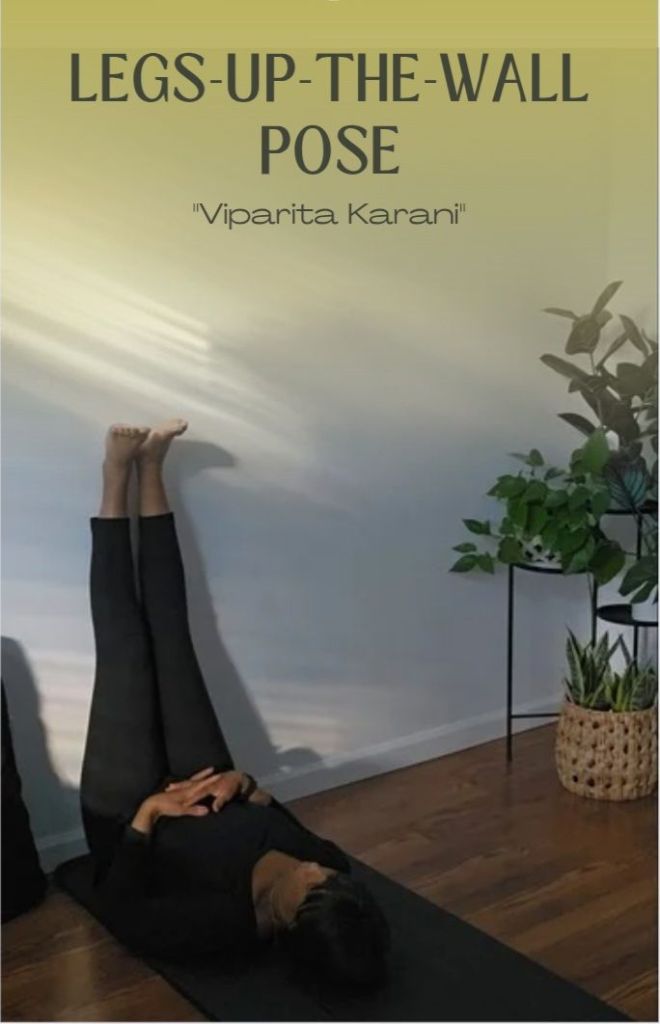
I have loved Viparita Karani, (more commonly known as “Legs-Up-The-Wall” pose), for as long as I can remember. There are some yoga poses that demand strength, flexibility, and endurance — then there are those that simply ask us to surrender. This pose definitely asks the latter. It is one of those postures that invites the body to soften, the breath to deepen, and the mind to rest. It is almost like Savasana to me on some days.
This is one of my favorite postures, not just because of its calming effects, but also because of how it supports circulation in my legs. As someone who hikes regularly, climbing rocky trails, and feeling the earth beneath my feet – my legs and my feet tend to take on a lot, and after all of that lower body movement Viparita Karani is the pose that I almost always retreat to the most afterwards.
After a nice, long hike and hot bath or shower I’ll find a quiet space, scoot close to a wall, extend my legs up and settle in. Within minutes, I can feel the gentle pull of gravity working its magic and reversing the effects of walking and exploring, easing tension throughout my body, and allowing blood to flow through my tired legs.
What is Viparita Karani?
If you aren’t familiar with this pose, Viparita Karani, (Legs-up-the-wall pose), is a supported inversion where the legs are elevated against a wall while the upper body rests on the ground. Unlike more intense inversions, such as Sirsasana (Headstand)or Sarvangasana (Shoulderstand), this posture is accessible to all levels, and allows gravity to do the work making it an ideal pose for rest and renewal.
Whether after a long day, before going to bed, or as a midday reset, this gentle inversion is a reminder that sometimes, rest is the most productive thing we can do — especially living in a world that moves at an unrelenting pace, where stress can seep into our muscles and exhaustion can become the norm.
Why Practice Viparita Karani?
The benefits of this pose stem from its accessibility and its ability to nourish the body in so many ways
The physical benefits of this posture are that it encourages circulation and lymphatic flow, as elevating the legs allows blood and lymphatic fluid to move more freely, reduce swelling and support cardiovascular health. It also reduces tension in the lower back as it provides a gentle spinal decompression that can help alleviate pressure in the lumbar region. In addition, it reduces lower-body fatigue making it ideal for tired, achy legs and feet — great for those who stand or sit for long periods of time.
The mental and emotional benefits of this posture are that it supports the nervous system by shifting us out of a stress response and into a state of relaxation by activating the parasympathetic nervous system and helping to shift the body into a restful state, reducing stress and anxiety. It also encourages mindfulness and presence and can help improve sleep quality promoting a deeper, more restful nights sleep as it helps to soothe overstimulation and an overactive mind from accumulated stress.
The energetic benefits of this posture are that it can help balance the body’s energy flow as inversion postures are believed to refresh pranic energy and promote mental clarity.
Contraindications + Considerations of This Posture
While this pose is generally a safe and accessible posture, as with any yoga pose, it may not be suitable for everyone. Therefore, you should consider modifying or avoiding this pose if you have ever, or are currently experiencing any of the following:
- controlled or uncontrolled high blood pressure (since inversions can affect circulation and blood pressure regulation),
- any neck, back, hip, pelvis, knee or spinal injury (listen to your body and modify as needed),
- are in the later stages of pregnancy or feel discomfort in this position for any reason,
- or have any eye conditions such as glaucoma that could be aggravated by inversions increasing intraocular pressure.
As a gentle reminder, it is important to always listen to your body and consult with your physician or other healthcare provider before practicing – especially if you have a pre-existing condition or any concerns.
Step-By-Step Guide to Practicing Viparita Karani – Without Props
- Find an open wall space and sit sideways with your hip touching the wall.
- Gently recline onto your back as you simultaneously pivot your legs up the wall. Your pelvis should be near the wall, but adjust your distance for comfort.
- Rest your arms either by your sides, palms facing up, or place them onto your belly or chest for a grounding sensation.
- Soften your gaze or close your eyes, allowing your body to relax fully.
- Breathe deeply, staying in the pose for 1 – 5 minutes (or longer if your body calls for it). When ready to come out of this pose, bend your knees in toward your chest , roll to one side, pause and gently push yourself up into an upright seated position such as easy pose.
Prop Assisted Variations for Comfort + Accessibility
1. For Lower Back Support
- Place a bolster or folded blanket underneath your hips and sacrum before lifting your legs up the wall. This slight elevation enhances the inversion and can be helpful for those with tight lower backs.
2. For Enhanced Relaxation Effects:
- Secure a yoga strap around your thighs or calves to prevent the legs from splaying outward, reducing the effort required to hold the pose.
3. Bent Knee Variation with Feet on the Wall:
- Instead of fully straightening your legs, keep your knees bent and place your feet on the wall at a comfortable angle to reduce the strain on the hamstrings and lower back.
4. Butterfly / Supported Supta Baddha Konasana Variation
- Bring the soles of your feet together and let your knees fall open for a Supported Butterfly Variation.
5. Chair Alternative:
- If a wall isn’t available or an option, rest your calves on a chair or couch instead while on your back. Bring the soles of your feet together and let your knees fall open for a Supported Butterfly Variation.
Viparita Karani (“Legs-Up-The-Wall pose”) is a simple yet powerful posture that offers both physical, mental and energetic benefits. By incorporating this “feel good” pose into your practice, you can ease tension, improve circulation, or just find a moment of peace in a way that feels restorative.
If you would like to listen to this information while on-the-go, you can find the title of this blog post on the Salubrity and Soul Yoga Podcast.
 Salubrity + Soul Yoga