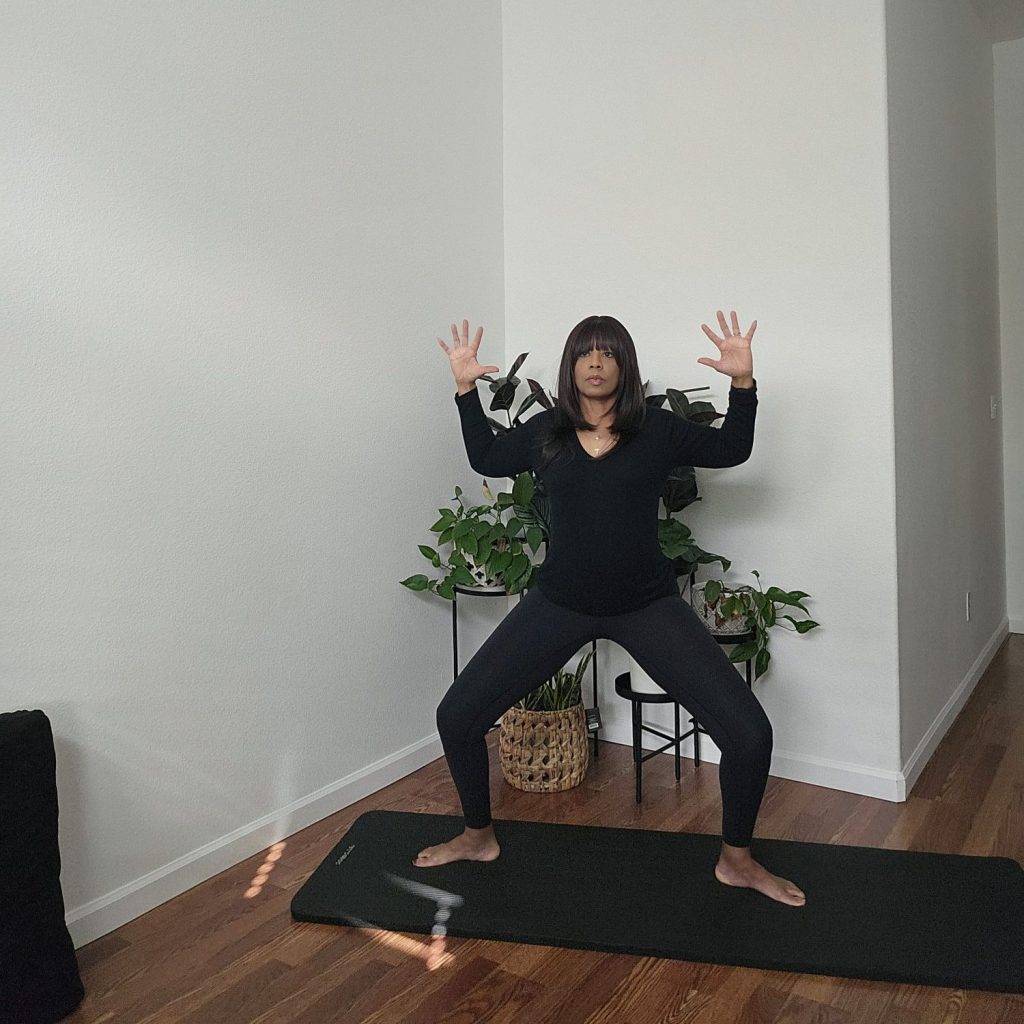
Utkata Konasana | Rooted Strength + Grounded Grace in Goddess Pose

Philosophical Insight

In yoga, Goddess Pose in more than a physical stance, it is an embodied reflection of empowerment and of Shakti, the primordial feminine energy that moves through all creation. When we are in this posture, we encounter the delicate balance between sthira (steadiness) and sukha (ease). learning that strength and softness aren’t opposites, but expressions of the same consciousness.

To practice Goddess Pose is to honor both the power that holds us upright and the surrender that allows us to remain open. In this pose our legs root into the ground, reminding us to take on the characteristics associated with stability and grounding, while our heart remains lifted. The heart lifted, reminds us to be receptive, expansive and unguarded. This asana becomes a meditation on duality of power and grace, effort and ease, and form and flow.

In a world that often equates strength with rigidity, Goddess Pose teaches a more profound lesson, which is that true power; that of strength of presence, grace and grounded resilience arises when effort meets awareness and intention guides action. This asana invites us to connect with our inner Shakti. It is a posture that encourages not just physical engagement, but a reflection on the qualities that make us strong, supple and whole. It reflects the inner dialogue between strength and softness and effort and surrender. Each moment in this pose is an invitation to embody balance.

Understanding the Pose

Goddess Pose begins from the foundation of the body, which is that of the feet. The feet turn outward, knees are bent, hips are descended into a wide, steady stance. This base not only strengthens the legs and glutes, but also stimulates the root chakra (Muladhara), which is the energetic seat of grounding, stability and presence.

As the spine lengthens and the arms open into cactus shape, the chest lifts, engaging the heart chakra (Anahata), which is the energetic center of courage, compassion and openness.

This interplay of groundedness and lifting mirrors the subtle equilibrium that yoga encourages, which is the coexistence of strength and receptivity.

How to Practice Goddess Pose
  1. Find your stance. Begin by standing tall in Tadasana (Mountain Pose). Step your feet out wide (roughly about two to three feet apart depending upon your body’s structure.) Turn your toes out to approximately 45 degrees and your heels slightly in. Allow your rotation to originate from the hips instead of the knees or ankles.
  2. Establish a stable foundation. Press evenly through the four corners of each foot. (The base of the big toe pinky toes and inner and outer heel.) Engage the arches of your feet slightly and root down into the ground while creating a lift through the legs and the pelvis.
  3. Bend your knees. Lower your hips toward knee level. Keep the knees aligned over the the toes, avoid collapsing inward or outward. Draw the tailbone slightly down while lengthening the spine upward, maintaining a natural curvature of the spine.
  4. Lift through the spine. Maintain length from tailbone to crown, ensuring the chest lifts without overarching the lower back.
  5. Open the arms. Bring the arms into cactus shape (elbows bent around 90 degrees, wrists in line with the shoulders, palms forward.) Draw the shoulders down and away from the ears, broaden across the collarbones, and allow the chest to expand. Avoid flaring the ribcage forward or collapsing inward. Allow your breath to guide the lift nautrally.
  6. Breathe and hold. Remain in this posture for 5 to 8 breaths (30 -60 seconds).
  7. To release from this pose. Straighten the legs, and lower the arms. Bring the feet together into a neutral stance such as Tadasana (Mountain Pose).

Additional Variations

Chair Goddess Pose:

Sit at the edge of a sturdy chair with feet wider than your hips, and toes slightly turned outward. Engage your legs and your core. Keep the spine tall. Hands may rest on your thighs or be positioned in cactus shape. This variation maintains the integrity and essence of the pose while reducing strain on the knees and hips.

Wall Support:

Stand near a wall Press your hands lightly against the wall at shoulder height for additional balance support. You can also try placing your back against the wall for more stability.

Gentler Variation:

For a softer approach to this pose, try keeping a slight bend in the knees and not lowering the hips down as much, and bring your hands to heart center (Anjali Mudra), if preferred over cactus arms. Focus on breath, presence and awareness rather than the depth or intensity of the posture.

Common Misalignments
  • Knees collapsing inward – Engage outer hips and thigs to maintain alignment.
  • Ribs flaring forward – Draw front ribs toward the spine and lengthen through the torso.
  • Shoulders creeping toward the ears – Relax the shoulders and broaden across the upper back.

Benefits of this pose:
  • Strengthens the legs, hips and core.
  • Opens the chest shoulders, and upper back.
  • Improves balance and stability.
  • Enhances circulation and endurance.
  • Helps cultivate confidence, steadiness and presence.

Contraindications:

Avoid, modify or try a different variation if you have:

  • A knee, hip or ankle injury
  • Pelvic or sacral instability
  • Balance limitations

Gentle Reminder: Always honor your body’s limits. Your presence, safety and benefit is more important than the depth or aesthetics of your pose.
The Embodied Practice Beyond the Poses – Is it Still Yoga if You’re Not Doing the Poses?

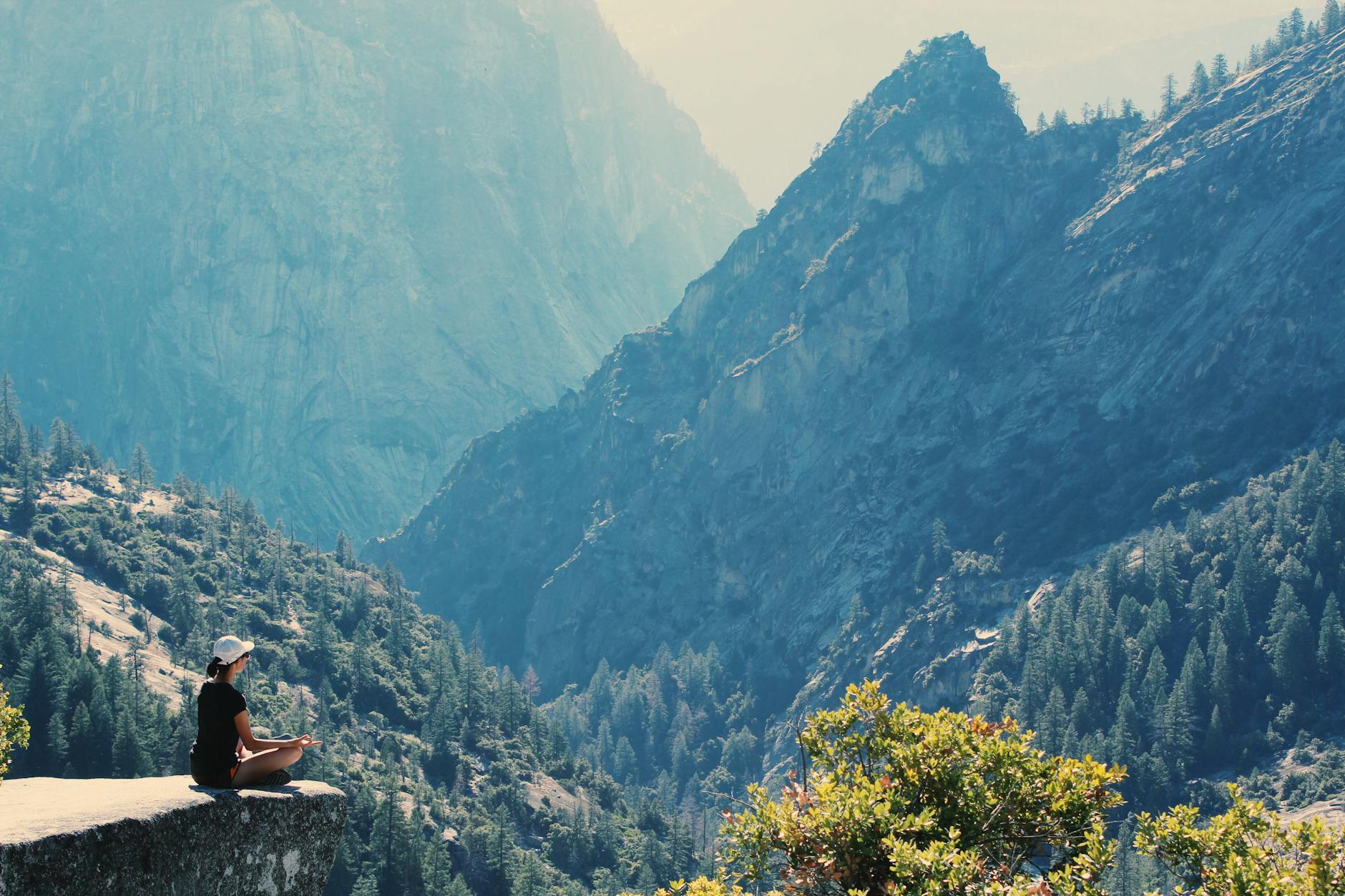
A person meditating on a rocky ledge, overlooking a breathtaking mountainous landscape with lush green trees and hazy blue peaks in the background.

Have you ever noticed how, sometimes, whenever we hear the word “yoga” our minds tend to drift to lavish, serene studios, someone in a flowing posture, someone sitting in lotus pose or lying in a peaceful savasana? In 2025, I think we are now all more aware that yoga, in its truest form, is more than this. It is a sacred invitation to live with awareness and integrity. It is an invitation to practice as you are and in a way that resonates with your own yoga and life journeys. It is an invitation to practice in a way that helps you befriend your body. It is an invitation to unlearn a lot of the things that we have been conditioned to believe about yoga. It is an invitation to realize that yoga might also sometimes ask us to hold space for some uncomfortable truths surrounding yoga. And last, (but definitely not least), it is an invitation not just practice yoga, but to live it as well.

In this post, I invite you to explore the heart of living yoga. Yoga that steps off the mat and into the world at large. Yoga that breathes into the messiness of life. Yoga that does not look away from injustice, but instead courageously meets it with compassion, clarity and action.

The Hatha Yoga Pradipika promotes yoga as a physical, energetic and spiritual practice and teaches us that asana is not for flexibility, but for steadiness and meditation. While the Yoga Sutras of Patanjali remind us that the physical poses are but one limb of an eightfold path. This path also includes the yamas and niyamas, which are ethical principles that guide us toward non-violence, truthfulness and contentment, among other principles.

These teachings are not abstract ideals; they are practical, embodied values meant to shape how we treat ourselves and one another. Yoga has a way of asking us to look within and around ourselves, and to stay grounded in presence while opening ourselves up to both the burdens and the beauty of the world.

I have had a few experiences in my life that I could attribute to living my yoga practice. Interestingly enough, those moments were not within the confines of a yoga studio, or in a yoga space even, but instead were while standing with others in grief, injustice, fellowship, joy, simple moments of peacefulness, and when practicing stillness during times of conflict. There have been times when I have found yoga in the courage to speak up, or carry the weight of humility when someone needed me to listen deeply and without judgement, or when I have had to give myself the grace needed to hold space for my own healing – or someone else’s.

It is within these spaces that I have also found community, (and quite unexpectedly because sometimes yoga spaces can be somewhat competitive), but something really uplifting happens when people of all backgrounds, bodies and experiences come together to breathe, move, reflect and connect. It is in these moments that I am reminded that yoga is also relationships, connection and being conscious of humanness as a collective experience.

I’ve discovered that to live your yoga fully is to awaken yourself to our shared humanity and our responsibility to one another. It means acknowledging that systems of harm exist, and that we have a role to play in dismantling them beginning within ourselves.

A few ways that yoga and social justice intersect are when we practice ahimsa by speaking out against violence, oppression and wrongdoing. It is when we create inclusive, accessible spaces for all, and recognize that personal healing and societal healing are not separate – but delicately interwoven. It is when we honor the roots of yoga, acknowledging its South Asian lineage and resisting its commodification.

None of this is political. It is spiritual. It is the essence of karma yoga which is selfless action born from love.

Some of the ways that I have become accustomed to living my yoga are to use my breath and awareness to help ground myself in presence, as this helps me create the clarity that I need to carry out thoughtful, compassionate action. I also find myself reflecting more on on my values and my voice, and often ask myself “What do I stand for?” or “Where is my voice or action needed?”

I have also had to learn to be more present by educating myself and learning about things that I wasn’t aware of; especially from those who have lived experiences that differ from my own.

I had to learn to be more courageous about allowing my yoga to be in action. Whether showing up for communities, amplifying marginalized voices, taking part in an event. signing petitions, or volunteering in some other way. This is taking compassionate action.

Then there’s cultivating sattva (or creating balance and harmony) and understanding that a sattvic life does not avoid discomfort, but meets it with grace.

The embodied yoga practice is a sacred remembering,

that your breath matters.

That your presence makes a difference.

That your practice has power – not just to change your life, but to uplift others.

I invite you to reflect on where you can bring more compassion, clarity and courage into your life today?

How might your practice become a bridge between inner peace and outer action?

How are you practicing yoga when you’re not doing the poses?

I would love to hear your reflections. Share how you’re living your yoga in the world – whether through daily intentions, social action, or in another capacity. Tag me on social media @salubrityandsoulyoga and use the hashtag #TheEmbodiedPractice to be a part of the conversation.


Grounding Self in Gratitude + Experiencing Earth Day Through Yoga

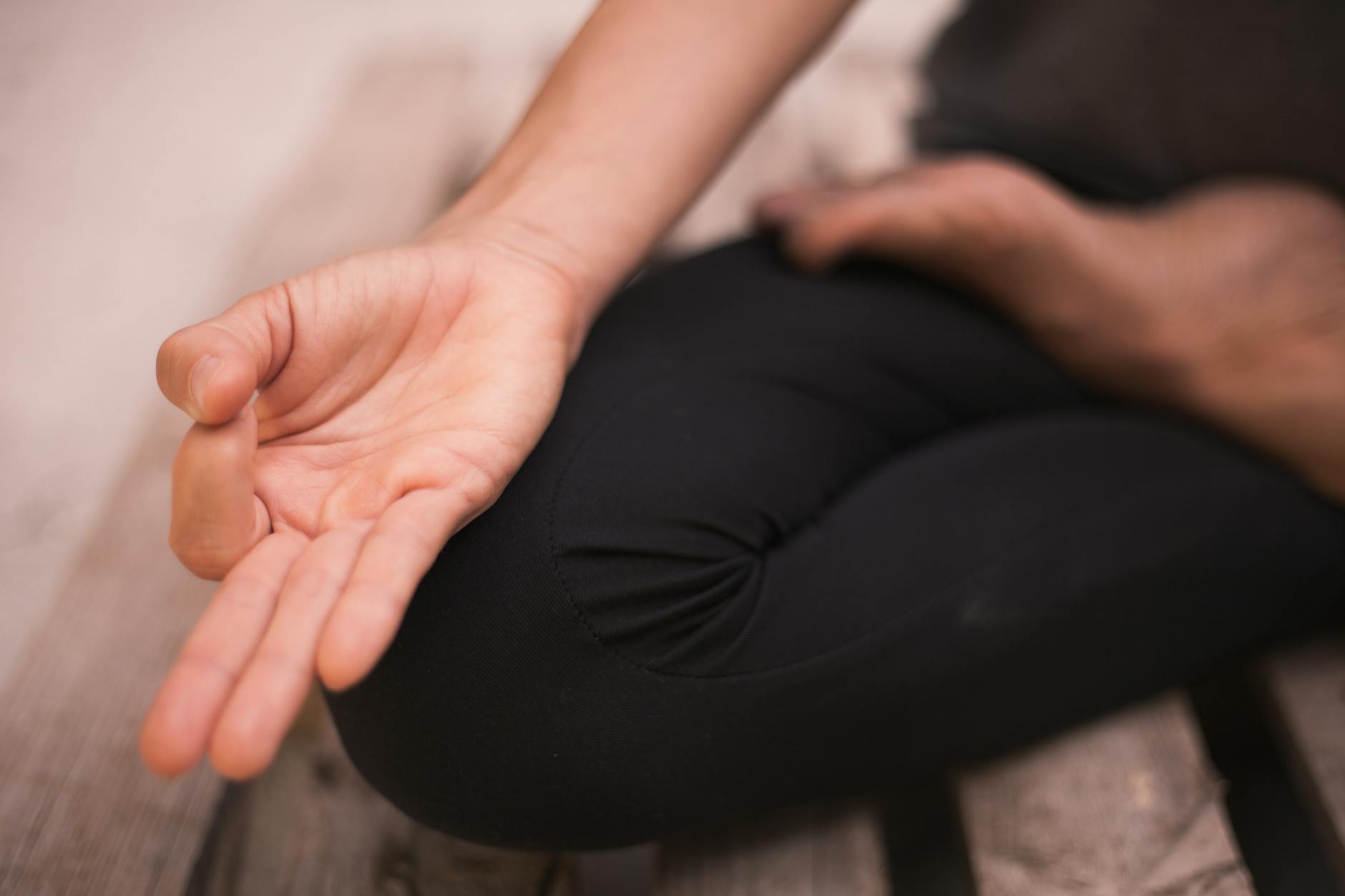
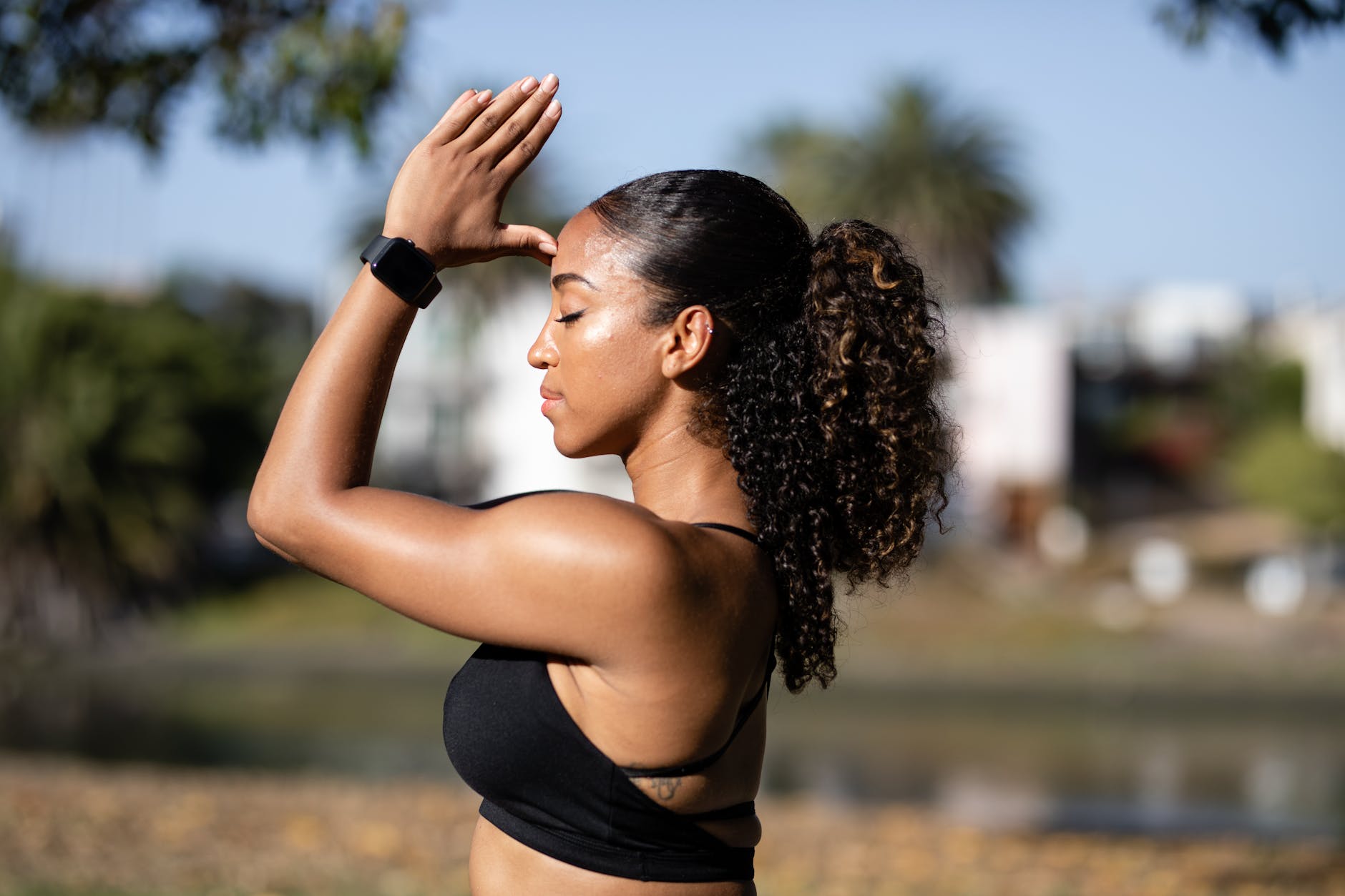
A woman practicing yoga outdoors in a serene setting, holding a mudra with her hands raised in front of her face, with closed eyes and a peaceful expression.

Every year, as our calendars turn to April, I find myself returning to a familiar stillness. It is a stillness that reminds me of the first time that I truly paid attention to how the earth felt beneath my feet during an ayurvedic practice of “Earthing.” Earth Day has become more than just a marked moment in springtime for me. It has become a soulful invitation to remember that this planet is not separate from us, but very much a part of us. It breathes with us, holds us and nourishes us. It is sacred.

This year, in 2025, Earth day occurs on Tuesday, April 22nd, and as I sit with reverence for this day, I can’t help but think about how yoga also tends bring us to a place of contemplation that calls us to remember who we are, and the people, places, and things that we are connected to. It calls upon us to remember how we can move gently though our yoga poses; and in the world. It invites us to live with intention and breathe with deep, abiding appreciation for the world that lives inside of us, just as much as the world that lives outside of us.

A Brief History

Earth Day has been around since 1970. It was created as a result of a collective longing to protect the planet after having noticed that it was not receiving the care and concern that it deserved, and desperately needed. It was also call to consciousness that developed as a way of responding to the crisis surrounding harmful environmental negligence, and pollution. In Earth Day’s beginnings, people gathered in the streets by the millions with their hearts united in the hope and love that they had for our planet; and this movement created space for innovation with regard to policy change, living life healthily on planet earth, and has been inspiring generations ever since.

Gratefully for us, (and for Mother Earth), Earth Day still gently whispers softly to us reminding us to continue caring and loving our planet, ourselves and those that will come after us.

A Yogic Invitation to Remember our Roots

From yoga, we can begin to gain an understanding of how deeply intertwined we are with everything that we come across in life. The Earth isn’t solely something for us to live on, or look and stand upon. We belong to Earth, and she is ours as well.

Through the practice of Ahimsa, we learn that non-harming helps us honor all life, and when participate in programs that are designed to help our planet Earth, such as recycling, choosing sustainable living practices, or eating mindfully even, those are ways that we are also practicing yoga, albeit off the mat. Ahimsa also invites us to speak gently to ourselves and others, walk with care upon the land, and float upon the sea with an appreciation for this place that we’ve been gifted from Source. When we do so, we are extending our yoga practice into the world.

When we practice grounding mudras such as Prithvi (“Earth”) mudra, or grounding asanas like Tadasana (“Mountain Pose”) both can provide a way of communing with the Earth, and these are practices that can help us remember that we are always held.

Practices to Celebrate Earth

Practicing Yoga in Nature

One of the most profound ways to honor this planet that we live on is to take our yoga practice outdoors. This offers us a way to feel the warmth of the sunlight upon our skin, and the way the wind envelops around our breath. It offers us as way to become familiar with how birdsong can become a part of the rhythm that we move to as we maneuver through our days. There is a sweet magic that unfolds whenever we place our feel in sand, soil or grass to practice upon. It can help us listen more intensely, and feel more connected to our planet as a place that is a home for our bodies.

Grounding Poses

Practice yoga poses that help you root into the Earth like Vrksasana (“Tree Pose”), Tadasana (“Mountain Pose”), or Balasana (Child’s Pose) as these poses provide an opportunity for you to feel supported, stable and at peace. In “Tree Pose” and “Mountain Pose” think of your feet reaching down into the Earth like strong roots. While in “Child’s Pose” imagine your body surrendering to the Earth trusting her to hold you.

Earth Centered Breathwork

The pranayama practice of Nadi Shodhana (Alternate Nostril Breathing) is a great way to help balance the internal environment with the external. Try thinking of each breath cycle that you take as an offering that allows you to “inhale gratitude” and “exhale honor” Your breath can serve as a soft prayer for the Earth.

Rituals of Gratitude for Everyday

Yoga teaches us that our practice is rooted in presence, not just physical postures, and Earth Day invites us to be present with the Earth in simple, but meaningful ways, such as through walking meditation. In walking meditation we can say “Thank You” to the Earth with each intentional step. We can take notice of the textures of the ground we walk upon underneath our feet and allow our body to remember it’s special place in the web of life.

We can practice sacred offerings by placing an herb, flower, stone or handwritten note as a blessing beneath a tree or near a river, stream or waterfall. We don’t need to say anything in this practice. Mother Earth always has her ears open to hear what we have to say.

By making mindful choices we can send ripples of intentional sustainability out by choosing earth friendly products, and supporting eco-conscious businesses when we shop.

A Living Practice, Not For One Day Alone

As we celebrate Earth Day, may we come to acknowledge that caring for the Earth is not something that we should take lightly because it is vital to our survival. Caring for the planet that we live on should be instinctive and second-nature. It should be something that calls out to us at all times. We should breathe this necessity and feel it in our bones and at the core of our being. Most of us know this and feel it in our hearts every day. Those of us that do know this truth understand that our dear Mother Earth, she, in her quiet wisdom, teaches us how to be present, how to be resilient, and how to rise again and again with grace. However, maybe it’s just a hunch, but I don’t think that she really expect us to have to do so when it comes to taking care of our home, feeling safe and as though our basic needs are being met, or when it comes to taking care of her because without her we lose so much.

So let your yoga serve as an act of radical love for the planet. Let your breath be a way of saying, “I am here and I am grateful for this existence.”

Let every step that you take be infused with a fondness for this beautiful, breathing world.

Happy Earth Day my friends, and may your yoga practice root you deeply into the sacred soil of this life.


Yoga + Honoring World Health Day in 2025

As we come together to honor World Health Day on April 7, 2025, from a yogic standpoint, we recognize not just the significance of physical well-being but the deep, intrinsic bond between our bodies, minds, and spirits. The theme of World Health Day this year is “Healthy Beginnings, Hopeful Futures” highlighting maternal health and newborn well-being. It is a theme of great importance, as it underscores the urgency of reducing maternal and newborn deaths while focusing on the long-term health and vitality of mothers, their children and families across the globe. As a mother who has experienced high-risk pregnancies, I felt compelled to share this important day and the role that yoga can play in this issue as a source of support.

The State of Maternal and Newborn Health as a Global Crisis

Despite substantial strides in medical care, the statistics on maternal and newborn health remain sobering. In 2020, an estimated 287,000 women lost their lives due to complications during pregnancy and childbirth, and 95% of those deaths occurred in low–and middle income countries. In the U.S. in 2021 there were 1,205 maternal deaths, 817 in 2022, and in 2023, 669 maternal deaths were reported (PBS.org, Public Broadcasting Service, February 2025). Moreover, in 2022, over 2.3 million newborns tragically died in the first 28 days of life, a number that continues to haunt the global conscience. These deaths–estimated at about 6,500 infants per day – serve as a grim reminder that the work that we need to do to change this reality is far from finished.

And it’s not just about the numbers. Behind each statistic is a story of mothers, fathers, and families striving for hope, health, and the promise of a brighter tomorrow. Infections, hemorrhages, hypertensive disorders, and lack of access to skilled healthcare remain key factors contributing to this crisis. However, it is essential to recognize that while medical interventions and improved healthcare infrastructure are indispensable, there is also a holistic approach to maternal and newborn health that cannot be overlooked.

In this space of challenge, there is great potential for transformation–and one powerful avenue to support maternal health is through yoga.

Yoga as a Source of Strength + Prenatal Yoga’s Role in Maternal Well-Being

Yoga is a practice that invites us to move beyond mere physical exercise; it encourages us to connect with our innermost selves, listening deeply to the wisdom that our bodies hold. For expectant mothers, yoga can become a sacred tool, nurturing both the body and mind during one of life’s most beautiful and meaningful transformations. Furthermore, prenatal yoga, when practiced mindfully and with care, offers a wide array of benefits that support maternal health some of which include:

  • Stress Reduction + Emotional Balance: The transition into motherhood can be a wonderful, yet overwhelming experience. Yoga helps calm the nervous system, reducing stress and anxiety, while cultivating emotional resilience in the face of the unknown. Through gentle breathwork in the form of pranayama and mindful movement, yoga fosters a sense of empowerment and inner peace, creating a serene, centered space for both mother and baby.
  • Physical Relief + Support: Pregnancy comes with a myriad of physical changes– back pain, sciatica, swelling, and fatigue for example, and prenatal yoga can be a life raft in this sea of discomfort, gently stretching and strengthening the body. It supports alignment, alleviates discomfort, and strengthens the muscles crucial for birth and postpartum recovery.
  • Breathing for Birth: The breath is one of the most powerful tools a woman has during childbirth. Breath control, or pranayama, can help a mother stay grounded and focused throughout labor, easing the intensity of contractions and facilitating a smooth, supported delivery. Practices like diaphragmatic breathing and Ujjayi breath can offer deep relaxation and rhythm during labor, as well as a sense of calm throughout pregnancy.

The Importance of Working with a Certified or Registered Prenatal Yoga Teacher

It is crucial to recognize that prenatal yoga should not be approached haphazardly. Just as you would seek professional guidance for other aspects of your health, working with a certified prenatal yoga instructor ensures that your practice is tailored specifically to your changing body. A certified or registered prenatal yoga teacher can provide you with the right modifications, create safe sequences, and ensure that your practice aligns with your body’s needs during this very important time.

Pranayama for Maternal Health to Cultivate Calm + Connection

Pranayama is another powerful yogic tool for expectant mothers. The breath serves as a bridge between body and mind, calming the nervous system and centering the practitioner. However, when practicing pranayama during pregnancy, caution is necessary. Some forms of pranayama can be too intense and should be avoided, such as vigorous techniques like Kapalabhati (Skull Shining Breath) or Bhastrika (Bellows Breath), which can create unnecessary pressure on the abdominal area. Instead, gentle, soothing breaths like diaphragmatic breathing (deep belly breathing) and Nadi Shodhana (alternate nostril breathing) can help balance energy and create relaxation in the body and mind.

These simple yet powerful techniques allow a mother to tap into both her innate softness and strength. Pranayama cultivates focus, reduces anxiety, and enhances oxygen flow–an essential practice for both maternal and newborn health.

Postnatal Yoga + Supporting Recovery and Restoration

The journey doesn’t end with birth–it’s a new beginning. The postpartum period, though often marked by joy and delight, can also be physically demanding. Postnatal yoga can serve as a key recovery practice, helping mothers heal and reconnect with their bodies after childbirth. It can gently strengthen the core, relieve tension, and enhance emotional balance. In addition, it helps fosters a bond between mother and baby, creating space for shared moments of awe, wonder and connection.

As always, just as prenatal yoga should be practiced under the guidance of a certified or registered instructor, so too should postnatal yoga. The body undergoes immense changes after childbirth, and a skilled teacher will be able to help guide you through the process of healing, honoring the unique needs of your body at this stage.

Conclusion + Advocating for “Healthy Beginnings, Hopeful Futures”

This World Health Day, I invite you to reflect on the importance of maternal and newborn health. These lives are the foundations of our future– and they deserve the best possible start. By integrating practices such as prenatal yoga, pranayama, and mindfulness into the lives of expectant mothers, we’re able to take a significant step toward improving global health outcomes; and ensuring that each new life is born into a world of love, health, and possibility.

As we celebrate this special day on April 7th, let’s remember that well-being is not just a physical state but a holistic experience. It encompasses emotional, mental, and spiritual health as well. Whether you are expecting a child, supporting someone who is, or just reflecting on the larger theme of this day of recognition and awareness, here are a few ways to contribute to the betterment of maternal and newborn health worldwide–and take action:

Share what you know about maternal and newborn health within your community and destigmatize conversations surrounding maternal health.

  • Remind mothers of their essential need of radical self-care, and that their wellness and well-being is just as important as their baby’s.
  • Donate to initiatives that prioritize maternal and newborn care.
  • Offer support and share helpful tips on prenatal yoga, and other yogic practices with someone you know who is expecting, to help them prioritize their prenatal and postnatal wellness and well-being.

Together we can help ensure that every birth is safe, every mother is nurtured, and every newborn is given a radiant start in life.

*I would like to include that I am not certified in prenatal yoga, as it is not one of my  specialties. However, I am fortunate to know a few skilled yoga instructors who do specialize in prenatal yoga, and I would be more than happy to connect you with a  certified prenatal yoga instructor if you are looking for one – simply contact me.


References:

  1. Global Maternal Mortality (2020 Estimate – 287,000 deaths worldwide).
    • Source: World Health Organization (WHO), UNICEF, UNFPA, World Bank Group, and United Nations Population Division.

2. U. S. Maternal Mortality (2023: 669 deaths, 2022: 817 deaths, 2021: 1,205 deaths).

  • Source: National Center for Health Statistics (NCHS), Centers for Disease Control and Prevention (CDC).

3. Public Broadcasting Service (PBS, 2025) – PBS.org/newshour/health/maternal-mortality.


Viparita Karani | The Restorative Power of “Legs-Up-The-Wall” Pose

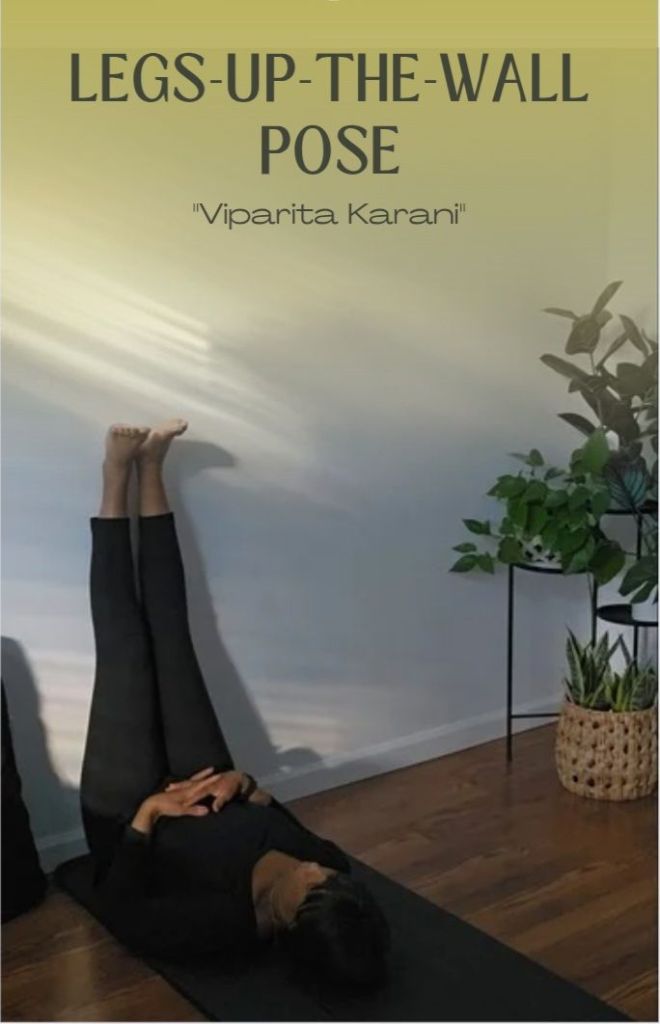
I have loved Viparita Karani, (more commonly known as “Legs-Up-The-Wall” pose), for as long as I can remember. There are some yoga poses that demand strength, flexibility, and endurance — then there are those that simply ask us to surrender. This pose definitely asks the latter. It is one of those postures that invites the body to soften, the breath to deepen, and the mind to rest. It is almost like Savasana to me on some days.

This is one of my favorite postures, not just because of its calming effects, but also because of how it supports circulation in my legs. As someone who hikes regularly, climbing rocky trails, and feeling the earth beneath my feet – my legs and my feet tend to take on a lot, and after all of that lower body movement Viparita Karani is the pose that I almost always retreat to the most afterwards.

After a nice, long hike and hot bath or shower I’ll find a quiet space, scoot close to a wall, extend my legs up and settle in. Within minutes, I can feel the gentle pull of gravity working its magic and reversing the effects of walking and exploring, easing tension throughout my body, and allowing blood to flow through my tired legs.

What is Viparita Karani?

If you aren’t familiar with this pose, Viparita Karani, (Legs-up-the-wall pose), is a supported inversion where the legs are elevated against a wall while the upper body rests on the ground. Unlike more intense inversions, such as Sirsasana (Headstand)or Sarvangasana (Shoulderstand), this posture is accessible to all levels, and allows gravity to do the work making it an ideal pose for rest and renewal.

Whether after a long day, before going to bed, or as a midday reset, this gentle inversion is a reminder that sometimes, rest is the most productive thing we can do — especially living in a world that moves at an unrelenting pace, where stress can seep into our muscles and exhaustion can become the norm.

Why Practice Viparita Karani?

The benefits of this pose stem from its accessibility and its ability to nourish the body in so many ways

The physical benefits of this posture are that it encourages circulation and lymphatic flow, as elevating the legs allows blood and lymphatic fluid to move more freely, reduce swelling and support cardiovascular health. It also reduces tension in the lower back as it provides a gentle spinal decompression that can help alleviate pressure in the lumbar region. In addition, it reduces lower-body fatigue making it ideal for tired, achy legs and feet — great for those who stand or sit for long periods of time.

The mental and emotional benefits of this posture are that it supports the nervous system by shifting us out of a stress response and into a state of relaxation by activating the parasympathetic nervous system and helping to shift the body into a restful state, reducing stress and anxiety. It also encourages mindfulness and presence and can help improve sleep quality promoting a deeper, more restful nights sleep as it helps to soothe overstimulation and an overactive mind from accumulated stress.

The energetic benefits of this posture are that it can help balance the body’s energy flow as inversion postures are believed to refresh pranic energy and promote mental clarity.

Contraindications + Considerations of This Posture

While this pose is generally a safe and accessible posture, as with any yoga pose, it may not be suitable for everyone. Therefore, you should consider modifying or avoiding this pose if you have ever, or are currently experiencing any of the following:

  • controlled or uncontrolled high blood pressure (since inversions can affect circulation and blood pressure regulation),
  • any neck, back, hip, pelvis, knee or spinal injury (listen to your body and modify as needed),
  • are in the later stages of pregnancy or feel discomfort in this position for any reason,
  • or have any eye conditions such as glaucoma that could be aggravated by inversions increasing intraocular pressure.

As a gentle reminder, it is important to always listen to your body and consult with your physician or other healthcare provider before practicing – especially if you have a pre-existing condition or any concerns.

Step-By-Step Guide to Practicing Viparita KaraniWithout Props

  1. Find an open wall space and sit sideways with your hip touching the wall.
  2. Gently recline onto your back as you simultaneously pivot your legs up the wall. Your pelvis should be near the wall, but adjust your distance for comfort.
  3. Rest your arms either by your sides, palms facing up, or place them onto your belly or chest for a grounding sensation.
  4. Soften your gaze or close your eyes, allowing your body to relax fully.
  5. Breathe deeply, staying in the pose for 1 – 5 minutes (or longer if your body calls for it). When ready to come out of this pose, bend your knees in toward your chest , roll to one side, pause and gently push yourself up into an upright seated position such as easy pose.

Prop Assisted Variations for Comfort + Accessibility

1. For Lower Back Support

  • Place a bolster or folded blanket underneath your hips and sacrum before lifting your legs up the wall. This slight elevation enhances the inversion and can be helpful for those with tight lower backs.

2. For Enhanced Relaxation Effects:

  • Secure a yoga strap around your thighs or calves to prevent the legs from splaying outward, reducing the effort required to hold the pose.

3. Bent Knee Variation with Feet on the Wall:

  • Instead of fully straightening your legs, keep your knees bent and place your feet on the wall at a comfortable angle to reduce the strain on the hamstrings and lower back.

4. Butterfly / Supported Supta Baddha Konasana Variation

  • Bring the soles of your feet together and let your knees fall open for a Supported Butterfly Variation.

5. Chair Alternative:

  • If a wall isn’t available or an option, rest your calves on a chair or couch instead while on your back. Bring the soles of your feet together and let your knees fall open for a Supported Butterfly Variation.

Viparita Karani (“Legs-Up-The-Wall pose”) is a simple yet powerful posture that offers both physical, mental and energetic benefits. By incorporating this “feel good” pose into your practice, you can ease tension, improve circulation, or just find a moment of peace in a way that feels restorative.

If you would like to listen to this information while on-the-go, you can find the title of this blog post on the Salubrity and Soul Yoga Podcast.


Honoring Black History Month Through Yoga

Well, the month of February has come and gone. Yes, I am a little late with this post, but it was intentional. As a woman of color yoga teacher holding both African, South Asian and East Asian Ancestry, honoring Black History Month through the practice of yoga holds a special place in my heart.

This post is for everyone. It’s for anyone who cares and who wants to stand in solidarity with those of us who carry this history in our blood. However, for those of us who happen to carry this history within ourselves, and within our souls, the month of February is not just a chapter within a textbook or a collection of stories from the past. It is a compilation of lived experiences and strength passed down from one generation to the next. It is resilience that holds on tightly every single day and that cannot be undone. The month of February is one month – but it is a time to remember, to honor and pay homage to our ancestors, to cherish our story – our journey and more important – to continue the work and to never forget any of it. In reality, Black History Month for us is every day.

Even though Black history month is a time of reflection, remembrance and celebration it can also be a time of embodiment. Through yoga, we can honor the wisdom, determination and power of those who came before us – not just in words, but in breath, movement and even in stillness. Yoga can be more than a practice. It can be a source of healing, ceremony, unity selfcare, and sovereignty.

Setting an Intention Rooted in Ancestral Wisdom

Intention is everything. It shapes the way that we move through life and how we show up for ourselves and others. The yogic concept of Sankalpa is often described as a deep and heartfelt resolution that aligns us with our truth and purpose. Black history is rich with individuals who embodied purpose – ancestors who carried wisdom across generations, visionaries who fought for liberation, and everyday individuals whose quiet resilience created ripples of change. Their legacies are woven into the present moment, and into our futures.

Before stepping onto your mat, try taking a moment to breathe and set an intention. What do you wish to carry forward? What wisdom are you honoring today? Perhaps it is the strength of your ancestors, the power held in resilience, or a simple moment of gratitude for the breath that sustains you.

Here are a few affirmations for Black History Month to guide you:

  • “I move with the strength and wisdom of those who came before me.”
  • “I breathe as an act of liberation, presence and peace.”
  • “I honor the journey, both seen and unseen, that brought me here today.”

Hold these expressions of Sankalpa close as you move, breathe and flow through your next practice.

Breath as an Act of Liberation

Breath is sacred. It sustains us, nourishes us and reminds us that we are alive. But breath has also been a symbol of struggle, resistance and resilience throughout Black history. From the forced labor of the enslaved, to the breath -centered traditions of spirituals, gospel and rhythmic movement, breath has long carried both hardship and hope. Even today, we hear the echoes of breath as a call for justice – reminding us that to breath freely is both a right and an act of power.

Meditation as a Source of Inner Strength

History teaches us that strength is not only physical- it is also the unwavering steadiness of the mind and spirit. Dhyana (meditation) is the practice of deep inner reflection, and of finding stillness even when the world around us is in utter chaos. Meditation has long been present in Black cultural traditions-whether in the form of prayer, song, or communal gathering. It is in these moments of stillness that we cultivate resilience, allowing ourselves to sit with both the joys and the sorrows of our history.

A Meditation for Connection

Find a comfortable seat and close your eyes. Breathe deeply and settle into the present moment. Once you are comfortable, silently repeat to yourself the following:

May I be strong. May I be free. May I honor those who came before me. May my ancestors be at peace. May their wisdom guide me forward.

Rest in this space of stillness, and allow the weight of your history to be acknowledged with deep love and reverence.

Movement as a Reflection of Strength

Our bodies hold memories. They carry imprints of our ancestors and hints of their stories. Asana (yoga postures) are more than physical movement – they can serve as a way to tell stories, express emotion, and honor the journeys of those who have gone before us. Through movement, we can connect to the strength, grace and resilience embedded in Black history. Through movement we can embody the courage of those who stood firm, the fluidity of those who adapted and reorganized, and the heart -opening presence of those who held space for healing and reconnection.

Try this 5 minute quick flow with asanas inspired by resilience and liberation and hold each pose for 1 – minute :

  • Mountain Pose (Tadasana): Stand tall, grounded in the wisdom of those who came before you.
  • Warrior II (Virabhadrasana II): Embody the strength and determination of Black leaders and visionaries. (Practice for 30 seconds on each side)
  • Camel Pose (Ustrasana): Open the heart in gratitude for the wisdom and endurance of our Black ancestors.
  • Child’s Pose (Balasana): Bow in reverence to our ancestors, surrendering in gratitude for the path that they paved.
  • Add a relaxing and restorative Savasana at the end.
  • Modify as needed and feel free to add to this short flow or incorporate it into one of your favorite yoga sequences.

Move gently through each pose, breathing deeply, and allowing yourself to feel the presence of history and connection throughout your body.

Reflection

Yoga teaches us that our practice is never separate from our daily lives, but a reflection of how we show up in the world. Honoring Black history through yoga for me is not just about looking back; it is about carrying all that we have discovered about ourselves and the world we live in. It’s about the light within that keeps carrying us forward. It’s our connection to a higher power, its about our sense of community and togetherness and so much more. As we move through the remainder of the year, may we continue to move with purpose and tell stories past and present of joy and perseverance through our practice.


Welcoming 2025 with Intention

How are you? No, but really, how are you doing? How is your heart? How is your mind? How is your body? How is your soul?

We’ve welcomed a new year, but for me this one feels dramatically different than any other year that I have ever encountered in all of my 50 “something” years of life. It feels very heavy, but I’m hopeful – still. One thing is for sure though, if there was ever a time that we could all benefit from a bit of mindfulness, yoga and meditation – it’s right now.

Throughout time, each new year always brings with it an opportunity to reflect on the past, present and the future. It also provides us with an opportunity to reset our path, goals, hopes and wishes helping us realign with what matters most to us, and with another chance to live within our purpose if we have not been doing so. The turning of the calendar has always been more than just making resolutions. It has always intended for us to create intentions that guide us to places and situations that can help bring peace to our minds and hearts.

My life experiences have taught me that each breath that we take is an opportunity to embrace life, cultivate joy and to keep moving forward with purpose. To help guide this journey, I would like to share an affirmation for 2025 with you – one that invites peacefulness, growth and radical self-care.

A New Year’s Resolution for 2025

“With each breath I take this year, I welcome balance, growth and joy into my life. I honor my body, nurture my soul, and embrace the journey of the path that has been set for me. Each movement on my mat is a step toward peace, and each moment of stillness is a reminder of my limitless potential. This year, I choose wellness, well-being, connection and purpose in every aspect of my being.”

Carol Murphy

Take a moment to pause. Close your eyes. Inhale deeply, and as you exhale, allow these words to settle into your heart. This affirmation isn’t just something to recite – but an invitation to embody these words throughout the year, to carry them with you in every intentional movement and breath that you encounter.

Setting Intentions Instead of Resolutions

New Year’s resolutions often focus on external achievements, but real transformation comes from within. Instead of rigid goals, why not focus on practicing mindful intentions instead? It’s not too late. Mindful intentions are gentle, sustainable commitments that align with our well-being. Here are a few ways to approach this year with intention:

  • Prioritize Your Well-Being: Make space for movement, nourishment without guilt, moments of silence and adequate rest.
  • Practice Mindful Living: Savor each moment, whether a quiet, slow morning, a deep breath, or time spent with your favorite people.
  • Embrace Self-Compassion: Release perfection and embrace progress, knowing that each step forward is meaningful.
  • Stay Present: Let go of past regrets and future worries. Be here now, and trust in your journey.

Moving Forward

As we continue our way through 2025, I invite you to join me in creating a year filled with intention, strength and meaning through living mindfully. Whether through asana, meditation, and breathwork or simply embracing daily moments of presence, let’s make this a year of growth – together.

This year will bring lessons. Some of which will be quiet, and some that will appear to be screaming from the mountain tops. Yet, through it all, the thing to remember is that there will always be space in which to move, to breathe, and to just be – and that is enough.

Wishing you a year of peace, purpose and radiant wellness and well-being!


A Beginner’s Guide to Transforming your Yoga Practice With Mudras

In the world of yoga, where breath and movement align with mindfulness, the practice of mudras–sacred hand gestures– has offered yoga practitioners a way to connect with their inner energy for thousands of years. These gestures, often called “seals” or “energetic locks,” are designed to channel prana (life force) within the body, inviting practitioners into a space of calm, focus, and spiritual alignment. Mudras create a bridge to our inner world, helping to balance the subtle energy currents flowing within us.

What Are Mudras?

In the Sanskrit language, the word mudra translates to “gesture” or “seal.” However, the practice is far more than a physical movement; it is a means of accessing deeper states of consciousness and attuning the body, mind, and spirit. According to the Gheranda Samhita, a classical Hatha Yoga text dating back to the 17th century, mudras are described as essential techniques for developing inner energy, awakening spiritual awareness, and this text also emphasizes the role of mudras in sustaining energy within the body and mind.

The Hatha Yoga Pradipika, another foundational text, refers to mudras as instruments for harmonizing mind and breath. By practicing mudras, yoga practitioners can conserve prana, increase concentration, and stabilize the mind, making them ideal for deep meditation (Saraswati, 1998).

When Are Mudras Used?

Mudras are used in a variety of yogic practices, including meditation, pranayama (breath control), and asanas (physical postures). Each mudra channels energy in a specific way, making them valuable tools in any mindful practice such as:

  1. Meditation: In meditation, mudras serve as grounding tools that help focus and calm the mind. For example, Gyan Mudra, also known as Jnana Mudra, is created by touching the thumb and the index finger together, leaving the remaining fingers extended. The thumb represents universal consciousness, while the index finger represents individual consciousness. By connecting these two fingers, this mudra can help enhance wisdom and concentration, offering practitioners a sense of connection to a larger consciousness.
  2. Pranayama: Mudras also play a role in directing prana during breathing practices. For instance, Prana Mudra, which involves joining the thumb with the ring finger and “pinky” or little finger, is thought to activate the life-force energy within. Yoga practitioners sometimes use this mudra to reduce fatigue and restore vitality by connecting the grounding energies of the earth (the ring finger) and fluidity of water (the little finger) with the transformative energy of fire (the thumb).
  3. Asana: While not as commonly used with most yoga poses, some poses incorporate mudras to help bring an added layer of energy direction and mindfulness to the physical postures of yoga. For example, Anjali Mudra, a more commonly used mudra in yoga, which is also known as “Prayer Hands,” is often used in both seated meditation and asana practices. By pressing the palms together at the heart, Anjali Mudra promotes a sense of inner unity and reverence, inviting the yoga practitioner into a heart-centered focus (Desai, 2017).

Understanding the Context of Mudras

Mudras are much more than simple gestures; they are practices grounded in the elements and the yogic understanding of energy flow. For instance, each finger represents one of the five elements (otherwise known as the “five great elements”, which is closely related to the Panchamahabhutas, a key concept in Ayurveda and Indian philosophy), that are believed to constitute all matter in the universe – including the human body. Those elements represented by each finger are as follows:

  • The thumb symbolizes the element of Fire or “Agni,”
  • The index finger represents the element of Air or “Vayu,”
  • The middle finger represents a connection with the element of Space or “Akasha,”
  • The ring finger represents the element of Earth or “Prithvi,”
  • And the “pinky” or little finger represents the element of Water or “Apah”

By positioning the fingers in specific ways, mudras create “locks” that direct prana, affecting both physical and mental states. Pantanjali’s Yoga Sutras – one of the primary philosophical texts of yoga – shares that yoga is “the cessation of the fluctuations of the mind” (Yoga Chitta Vritti Nirodha, Sutra 1.2). In practice, mudras help achieve this quieting of the mind by creating energetic stability and focus, ultimately bringing practitioners into a state of pratyahara (withdrawal of the senses) and a deeper self-awareness (Satchidananda, 1978).

Key Mudras and Their Benefits

  1. Gyan (or Jnana) Mudra: Thumb and index finger together, with other fingers extended. Enhances wisdom, focus and calm.
  2. Prana Mudra: Thumb joined with ring and little fingers, middle and index fingers extended. Stimulates energy, vitality and grounding.
  3. Anjali Mudra (Prayer Hands): Palms pressed together at the heart. Cultivates gratitude, compassion, and reverence.
  4. Dhyana Mudra: Right hand over left hand with palms facing up, thumbs touching, and hands resting in the lap. Enhances meditative concentration, creating a sense of inner stillness.
  5. Shunya Mudra: Thumb over the middle finger, index finger, ring finger and little fingers (“pinkies”) extended. Helps reduce feelings of emptiness, enhances mental clarity.
  6. Vayu Mudra: Thumb over the index finger with other fingers extended. Balances air in the body, relieves physical tension and stress.

In their simplicity, mudras remind us that the journey to self-discovery often begins with the smallest of movements. With each gesture, we tap into the inner currents of prana, helping to cultivate balance while awakening to our true nature.


References:

Desai, M. (2017). The Heart of Yoga. North Atlantic Books.

Saraswati, Swami Satyananda. (1998). Asana Pranayama Mudra Bandha. Yoga Publications Trust.

Feuerstein, G. (2008). The Yoga Tradition: Its History, Literature, Philosophy, and Practice. Hohm Press.

Satchidananda, Swami. (1978). The Yoga Sutras of Pantanjali: Translation and Commentary by Sri Swami Satchidananda. Integral Yoga Publications.


Challenging Yourself in Your Yoga Practice: One More Way to Deepen Your Practice


Yoga is often thought of as a gentle, calming practice, but it also has the potential to challenge us physically, mentally, and even emotionally. While familiar poses can offer comfort and consistency, stepping out of your comfort zone by trying new or challenging poses is a powerful way to foster growth in your practice. Here’s why it’s beneficial to test your edges in yoga, and how even a small step outside the familiar can lead to incredible transformation.

Why Challenge Yourself?

1. Physical Growth
Incorporating different types of poses helps build strength, flexibility, and endurance. When you practice new poses, you’re inviting your body to explore new ranges of motion and muscle engagement, leading to improved mobility and overall resilience.


2. Mental Resilience
Facing challenges on the mat encourages patience and mental strength. Trying a balance or inversion for the first time often brings up moments of hesitation, but learning to stay present and calm in those moments strengthens your mind. The confidence you gain from working through these challenges in yoga can extend into all areas of life.


3. Self-Discovery
New poses can reveal areas where we hold tension, fear, or even self-limiting beliefs. Observing how you respond to challenging postures can lead to meaningful self-reflection. For example, noticing frustration in a tricky balance can be a reminder to approach things with patience and kindness.


4. Variety and Avoiding Plateaus
Trying different poses prevents your practice from becoming routine. Each pose engages different muscles and creates a fresh experience, so incorporating variety helps prevent physical plateaus and keeps your mind and body engaged in learning and discovery.


What Makes a Pose “Challenging”?
A challenging pose isn’t necessarily an advanced or complex one. It’s simply any pose that feels slightly outside your comfort zone, pushing you in a way that feels engaging but safe. This could mean holding a familiar pose for longer, practicing a new variation, or exploring a posture that requires more focus or strength.

Below are a few examples of poses that can offer different types of challenges:

Examples of Poses to Challenge Your Practice

1. Strength-Building Challenge

Pose: Chaturanga Dandasana (Four-Limbed Staff Pose)

Why: Chaturanga strengthens the arms, shoulders, and core, which can be intense for beginners and experienced practitioners alike. Proper alignment is key, so going slowly builds endurance and control.

Try This: Slow down as you lower from plank, or pause halfway down to hold. This will increase the strength-building benefits of the pose.


2. Balance Challenge

Pose: Vrksasana (Tree Pose)

Why: Balance poses like Tree cultivate mental focus and body awareness. Balancing on one leg challenges your stability and core strength.

Try This: Experiment by closing your eyes or raising your arms, both of which make Tree Pose more challenging for balance and focus.


3. Flexibility Challenge

Pose: Uttanasana (Standing Forward Bend)

Why: For those with tight hamstrings or lower back tension, Uttanasana can be a great stretch, helping release these areas gradually.

Try This: Bend your knees slightly to fold deeper into the pose, then work on straightening your legs over time to increase hamstring flexibility.


4. Mental Resilience Challenge

Pose: Virabhadrasana III (Warrior III)

Why: This one-legged pose requires a blend of strength, balance, and focus. It teaches stability while cultivating mental focus and resilience.

Try This: Reach your arms forward or close your eyes for a few breaths to build mental and physical endurance.


5. Inversion Challenge

Pose: Salamba Sirsasana (Supported Headstand)

Why: Inversions can seem intimidating, but they help you trust in your body’s strength and resilience. Practicing inversions also enhances core and shoulder strength.

Try This: If you’re new to inversions, start with Dolphin Pose or use a wall for support. With time, you’ll build the strength and confidence to try headstand independently.


6. Mobility Challenge

Pose: Malasana (Garland Pose)

Why: This deep squat challenges hip and ankle mobility. It’s a great pose for opening the hips and lower spine, improving flexibility and range of motion.

Try This: Shift your weight from side to side to explore deeper hip mobility, or try lifting your heels for a balance variation.


How to Approach Challenging Poses Safely

When adding challenging poses to your practice, approach each with patience and curiosity. Remember, yoga isn’t about achieving perfection but about exploring your own boundaries and capabilities.

Listen to Your Body: Every day is different, so honor how you’re feeling in the moment. If a pose feels too intense, use props or modifications, or try a different variation.

Focus on Breath: Let your breath guide you. Maintaining a steady breath can help you stay grounded, even if the pose feels challenging.

Celebrate Progress, Not Perfection: It’s easy to focus on reaching the full expression of a pose, but celebrating small progress—like holding Warrior III for an extra second—builds confidence and joy in your practice.


Conclusion
Challenging yourself in yoga isn’t about doing the “hardest” poses or achieving flashy shapes. It’s about engaging with your practice in a way that encourages growth, resilience, and self-discovery. By stepping out of your comfort zone, even slightly, you’ll gain a deeper understanding of yourself, both on and off the mat. Embrace the journey, honor your body, and celebrate the small victories along the way.


The Appeal of Gentle Yoga + Embracing Slow Movements, Mindfulness, and Deep Connection

In today’s fast-paced world, many people seem to be drawn to yoga to seek something beyond fitness—something that offers a bit of calm amidst all the noise of daily life and of the world that we live in. For those who crave that deeper connection, gentle forms of yoga have become an especially welcoming path. Practices such as restorative yoga, hatha yoga, and chair yoga allow us to embrace peacefulness, and intention, inviting us to soften both physically and mentally.

As I have now begun to enter the world of yoga in a teaching capacity, learning to guide others in their yoga journeys, I am becoming more aware of how powerful gentle yoga can be. It is a practice that isn’t about pushing to achieve difficult poses but instead, it’s more about tuning in to our bodies, our breath, and our hearts. Gentle yoga meets you exactly where you are—creating a space where every stretch, every breath, feels like a way to return home to yourself.

The Growing Popularity of Gentle Yoga

Gentle yoga, which emphasizes slower, more nourishing movements and reflection over challenging poses, has seen significant growth in popularity. In addition, recent surveys indicate that around 50% of yoga practitioners in the U.S. practice yoga to relieve stress and relax, with many turning specifically to gentler yoga practices for this reason alone. This form of yoga allows practitioners to create a meaningful connection with themselves without the strain of difficult poses, making it a valuable and more accessible option for those who prefer a softer, more mindful approach.

For many, the appeal of gentle yoga lies in what it offers beyond the physical. These practices encourage us to check in with ourselves, moment by moment. The poses are simple and the pace is easier, yet this simplicity can be quite transformative.

Why People Choose Gentle Yoga

The reasons people turn to gentle yoga are as varied as the people themselves, but there are a few themes that seem to consistently emerge. Let’s explore some of the most common motivations.

1. Stress Relief and Relaxation

One of the main reasons people practice gentle yoga is for stress relief. When life feels like a never-ending to-do list, these slow, mindful practices allow us to pause and let go of the day’s weight. They invite us to slow our breath, ground our thoughts, and find a sense of peace that can be hard to come by.

2. Accessibility for All Bodies and Abilities

Gentle yoga is incredibly inclusive. Its slower pace and use of modifications make it accessible to people with a wide range of physical abilities, including those with conditions like arthritis, limited mobility, or past injuries. This inclusivity is what first drew me to teaching gentle yoga —knowing that I could potentially help others discover the heart and value of yoga, regardless of where they were starting from.

For those who are less drawn to high-intensity yoga classes, gentle yoga offers a comfortable space to explore our bodies without fear of pushing too far. It’s a practice that invites each of us to work with our unique abilities, and listen to our bodies as we place them into positions, instead of focusing mostly on those body positions.

3. Cultivating Mindfulness

Unlike practices that focus primarily on achieving specific poses, gentle yoga emphasizes the journey. It encourages us to pay attention to each breath and movement, while also being aware of how we are in the moment that we are practicing. This focus on mindfulness helps bring a sense of clarity and grounding to us in the moment that we practice, and teaches us how to move with more awareness in our daily lives.

In gentle yoga, trying to “perfect” a pose is less of a goal. I often remind my students that the shape of the pose doesn’t matter as much as how they feel within it. It is with each of the slow, mindful breaths that they take in throughout each gentle yoga class or session, that they’re able to reconnect with the deeper aspects of yoga – and themselves.

4. Fostering Long-Term Well-Being

Gentle yoga is as much about longevity as it is about today’s practice. Its movements are kind to the body, designed to enhance flexibility, strength, and balance without overworking muscles or risking injury. While guiding my students through gentle sequences, I become a witness to how this slower pace supports them in building a long-term practice that can sustain their wellness and well-being for years to come.

Gentle yoga acknowledges that every body is different, that every season of life brings new needs and limitations. It allows us to move in a way that feels sustainable and joyful -and in doing so, it fosters a deeper connection not only with the present moment but with our future selves.

The Transformative Power of Gentle Yoga

For so many, gentle yoga is more than just an alternative to intense exercise; it is a means of radical self-care. In the space between breaths and movements, there is room for healing, acceptance, and self-compassion. As someone who has walked the journey of mindful living and wellness, I see gentle yoga as an invitation to come back to ourselves. It is a practice that teaches us to honor our bodies, to appreciate each small movement, and to recognize that yoga isn’t a destination, but it may just very well be a lifelong journey.

If you’re considering yoga but feel intimidated by complex poses or fast-paced classes, know that gentle yoga is waiting to welcome you. It is clearly a “gentle” reminder that you don’t need to be flexible, strong, or young to experience the beauty of yoga. You just need a willingness to show up, move your body, breathe, and be present.


Sources

American Psychological Association. (2013). Stress in America™: Are Teens Adopting Adults’ Stress Habits?

Yoga Alliance and Yoga Journal. (2016). 2016 Yoga in America Study.

NIH. (2018). Yoga for Health: What the Science Says.