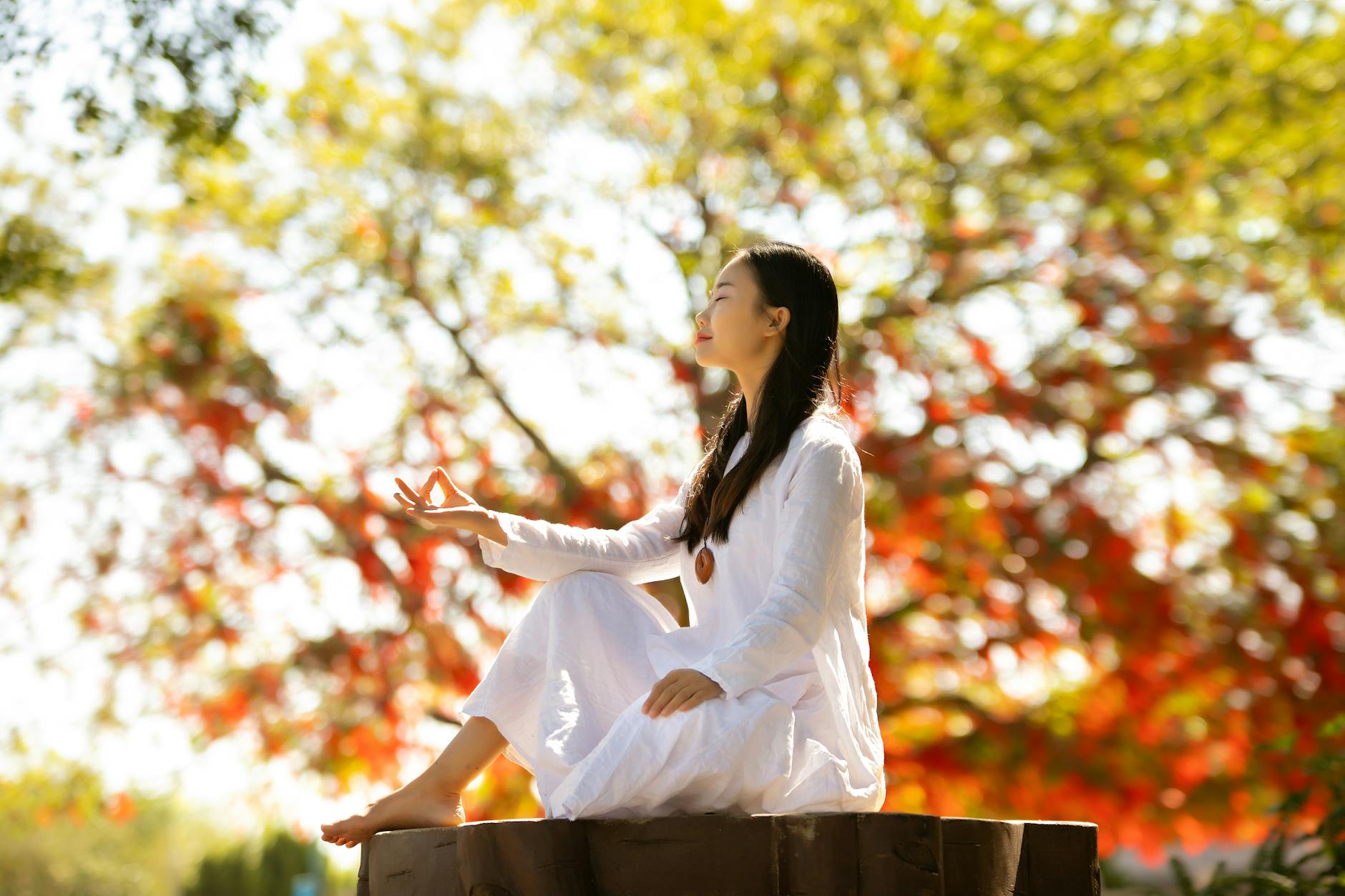
As the crisp air of fall begins to weave its way through the trees, I find myself drawn to the quiet wisdom that this season offers—a wisdom that speaks to the soul, inviting us to reflect, release, and renew. Fall, in its serene beauty, teaches us the delicate art of letting go. The leaves, once vibrant and full of life, gracefully fall to the ground, returning to the earth as nourishment for new growth. This gentle surrender of the trees reminds me of the way that we, too, must release some things so that we can make space for something new to emerge.
It’s a season that calls us to slow down, to embrace stillness, and to listen to the quiet whispers within. As the days grow shorter, nature offers us a mirror to reflect on our own cycles of growth, change, and renewal. Just as the trees shed their leaves in preparation for the long winter, we are also invited to shed the layers of our past—old habits, limiting beliefs, unresolved emotions — and make room for an unfolding of our highest selves.
There is a hint of sacredness in this process of letting go. It is not about abandonment, but about trust. Trusting that, just like the trees, we don’t need to hold onto everything in order to survive. When we release the weight of what no longer serves us, we allow ourselves to become lighter, more attuned to the rhythms of life, and open to the infinite possibilities that lie ahead.
In the quiet moments of fall, I’ve learned to embrace this act of release as a form of self care and self-love. It is not always easy — sometimes it’s the shedding of relationships, dreams, or habits that we’ve held onto for far too long. But in these moments of surrender, we are often able to find clarity. We are able discover the strength in vulnerability and the beauty of change.
And then, after the release, comes the renewal. The soil that has nourished the fallen leaves becomes rich with potential, awaiting the next season of growth. Similarly, once we make space within ourselves, that is often when we open the door to transformation. That is when we are more inclined to become more aligned with our purpose, more connected to the earth beneath our feet, and more present to the richness of every single breath that we take.
Fall is a season that teaches us to be patient with ourselves. Just as the trees don’t rush to bloom, we can take this time to, like the trees, honor the pace of our own growth. Renewal isn’t always immediate, but it is inevitable. Like the earth’s natural rhythms, there is a time for rest, a time for release, and a time for rebirth. Each stage is necessary for the next, and each step along the way can be considered a part of our soul’s journey.
As I walk through this season of fall, I find myself reflecting deeply on what it means to embody its wisdom. It’s a call to release, to reflect, and to trust in the gentle unfolding of life. In letting go, we invite renewal. In surrender, we find strength, and in the quiet beauty of the fall season, we are reminded that, while nature’s cycles bring new beginnings, it also inspires us to transform and grow – every wondrous, glorious season.
So, I invite you to embrace this season with an open heart. Take the time to pause, to reflect, and to let go. Allow the fall winds to carry away what you have outgrown, so that you can make space for the new, the vibrant, and the life that is waiting to unfold within you.
Yoga is a practice that we do not typically associate with the act of giving. Consequently, it can be easy to equate yoga solely with the physical practice of yoga that we engage in on the mat. But as yoga becomes more readily understood, many are now coming to realize that yoga is much more than a series of postures. We are all now becoming more aware of the fact that yoga is a way of being, and a practice that infuses every aspect of our lives. One of those aspects being the act of giving, and in yoga this can be done through the act of seva, or selfless service.
Seva, is the Sanskrit word for service, often defined as an offering without expectation of anything in return. At its heart, seva is about recognizing the interconnectedness of all beings and contributing to the well-being of others simply because it is the right thing to do. This spirit of giving is a powerful expression of yoga, reminding us that we are not separate form the world but integral parts of a whole.
What is Seva?
In yogic philosophy, seva is an essential part of the path toward living a yogic life. It is the embodiment of karma yoga – the yoga of action – where our deeds become offerings, performed without attachment to the results. Through seva, we move beyond the confines of the ego, expanding our awareness to embrace a higher sense of purpose and unity.
I am reminded of the words from Swami Sivananda who beautifully encapsulated this when he said, “The best form of worship is selfless service.” When we serve others with an open heart, we are not only contributing to their well-being, but also purifying our own minds and hearts. It is in this selfless giving that we discover one of yoga’s deepest teachings: that true fulfillment lies in the service of others.
Seva as Karma Yoga
Karma yoga, as described in the Bhagavad Gita, is the practice of selfless action – performing our duties without attachment to the outcomes. In this sacred text, Krishna teaches that one’s actions, when offered without expectation of reward, become a path to spiritual liberation. “You have a right to perform your prescribed duties, but you are not entitled to the fruits of your actions.”(Bhagavad Gita 2:47).
Through karma yoga, we learn to act with intention, love, and mindfulness focusing not on what we might receive but on what we can offer. Seva is this principle in action – a gift that we give freely, knowing that the joy of giving is its own reward.
The Transformation Through Seva
One thing that is truly transformative about seva is that it shifts our perspective from “what can I gain?” to “How can I give?” This practice strips away the layers of ego and invites us to connect more deeply with the world around us. It is a way of embodying the principles of ahimsa (non-harming) and satya (truthfulness), key ethical guidelines found in the Yoga Sutras of Pantanjali. When we serve others, we practice non-harming by uplifting those in need and uphold truth by acting with integrity and compassion.
In offering our time, energy, or resources to others, we also nourish our own souls. Through seva, we are reminded that service is not only about alleviating suffering but also about cultivating love, empathy and connection in a world that often feels disconnected.
Seva Off the Mat
While seva is certainly something that we can practice in yoga spaces – perhaps through teaching or volunteering at yoga studios – its power lies in how we carry this practice into the world at large. Seva doesn’t require a special setting or a specific context. It is something that we can embody in our everyday lives, wherever we see the opportunity to help others.
In my own life, supporting organizations such as Sepsis Alliance, Alzheimer’s Association, Stand Up 2 Cancer and others has become a way for me to extend my yoga practice into action. Whether I am raising awareness, sharing resources, or just holding space for someone else’s story, I am reminded that these acts of service are an extension of the practice of yoga itself. It is how I contribute to helping not only individuals, but also the collective whole.
The Ripple Effect of Seva
What is really beautiful about seva is that it often creates a ripple effect. One act of kindness inspires another, and soon, entire communities are uplifted. Whether we are supporting health organizations, standing up for social justice causes or volunteering our time in the communities and places that we feel called to, these acts of service have a far-reaching impact. They remind us that we are all connected, and through our service, we have the power to create positive change.
It is this ripple effect that keeps me grounded in my own yoga journey. Every time I take a moment to support causes that I care about, I am reminded that yoga is much more than individual poses and breathing exercises. It is about showing up, for ourselves and others, in ways that contribute to the greater good.
How to Incorporate Seva into Your Life
If you feel called to practice seva, here are a few ways to start:
Support Causes You Care About: Whether through financial donations, raising awareness, participating in an organization’s event, or volunteering, find ways to contribute to the organizations and movements that align with your values. Supporting causes like those I’ve mentioned has brought so much meaning to my life, and there are countless other ways to get involved.
Offer Your Skills: Everyone has something to offer. Whether you are a teacher, artist, writer, coach, medical or mental health professional, or have some other skill that could benefit others, offer it in service. You might volunteer to teach free classes, lend your expertise to an organization, or be a resource for someone in need.
Practice Daily Acts of Kindness: Your seva doesn’t have to be a grand action. Sometimes the smallest acts of kindness – a listening ear, a kind word, or a helping hand – can make a huge impact.
Be Mindful in Your Actions: The next time that you perform a task for someone or offer your time, do so with intention, care and selflessness. Remember that every act, no matter how small, can be an offering.
Seva reminds us that yoga is not just about personal enlightenment- it’s about contributing to the collective well-being. By practicing seva, we algin ourselves with the flow of universal love and compassion, dissolving the boundaries between ourselves and others. In every act of service we are practicing yoga in its truest form.
When we are not in our yoga spaces practicing yoga, and out into the world with hearts full as we serve, we bring the essence of yoga into our daily lives. Whether through supporting causes, helping those in need, or simply being a source of kindness in someone’s day, we live the practice of seva – and in doing so, we elevate not only our own consciousness, but the consciousness of the world around us.
With love and gratitude,
Carol
Sources:
Easwaran, E. (2007). The Bhagavad Gita (2nd ed.). Nilgiri Press.
Satchidananda, S. (2012). The Yoga Sutras of Pantanjali: Translation
Sivananda, S. (1999). Bliss Divine: A Book of Spiritual Essays on the Lofty Purpose of Human Life.
I remember the first time I truly listened to my body during a practice. I was in a Warrior Pose, determined to push deeper, just as I had done so many times before. But something shifted that day. Instead of stretching farther, I paused. I took a deep breath, softened my knees, and noticed how much more ease I felt in that moment. The tension in my hamstrings eased, and suddenly, my Warrior Pose felt completely different. I realized that it wasn’t about how far I could go, but about how my body wanted to move on that day, at that time. Have you ever had a moment like that, where you stopped listening to your old familiar external cues and tuned into to what your body truly needed?
Yoga, at its core, invites us to connect deeply with our bodies – to feel, sense and truly inhabit the physical space that we occupy. It’s easy to get caught up in external cues, striving for perfect alignment, or replicating the ideal version of an asana that we have seen in a book or class. But there is something far more profound waiting for us when we shift our focus inward and learn to listen to the wisdom of our own bodies.
This is where the practice of embodiment comes in – an invitation to not just do the poses, but to “really” be in them. To notice how our bodies respond, where we feel open or restricted, and what subtle adjustments feel nourishing and supportive. It’s a practice of tuning into the internal cues that our bodies are constantly offering and learning to trust that wisdom, even when it contradicts the external guidance that we are accustomed to following.
What Is Embodiment in Yoga?
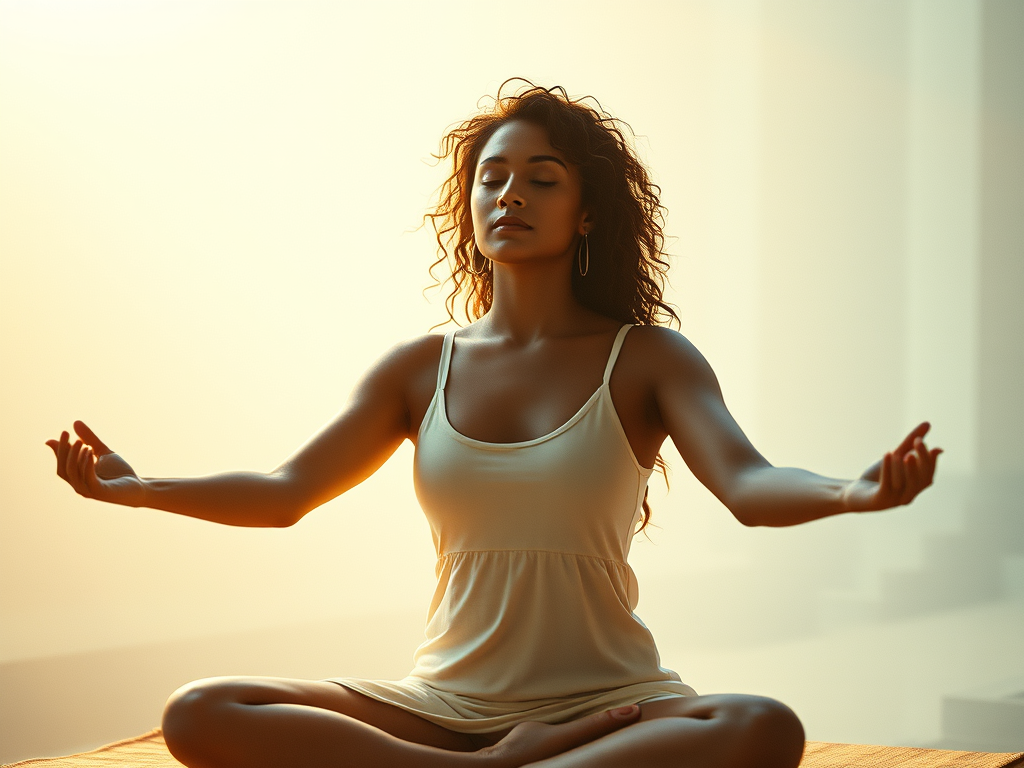
Embodiment is the practice of becoming fully present in the body, experiencing sensations, emotions, and movement with awareness. In yoga, this means moving beyond the mental image of a pose and instead focusing on how the pose feels in your body while you are practicing. It is about honoring the experience exactly as it is, rather than striving for an idealized version of your practice.
When we practice embodiment in yoga, we are not just working with bones and muscles – we are also tapping into the nervous system, which plays a significant role in how we experience movement and sensation. The nervous system is incredibly intelligent, constantly sending us signals about our physical, emotional and energetic state. Embodiment is the practice of tuning into these signals and allowing them to guide our movement.
Science shows us that when we are fully present in our bodies, we are engaging with the interoceptive system, the body’s internal sense of what’s happening inside. Moreover, a study published in the Journal of Neurophysiology explains that interoception – the awareness of internal body sensations – plays a key role in how we regulate emotions and manage stress (Critchley & Harrison, 2013). By cultivating this awareness through yoga, we not only enhance our physical practice, but also improve our ability to navigate life’s challenges with greater ease and resilience.
Listening to Internal Cues in Asana Practice
So how do we bring this practice of embodiment and listening to internal cues into our asana practice? Here are a few ways to start:
Begin with the breath: The breath is one of the most powerful internal cues that we have. It tells us when we are pushing too hard, when we are resisting, and when we are in flow. Before you move into any asana, pause and take a few breaths. Notice the quality of your breath – is it steady or are you straining to breathe? This can provide you with important information on how to proceed. If your breath feels tight or shallow, it might be a sign to ease up a little bit or modify the pose.
Don’t Force – Feel: Instead of trying to force your body into a specific alignment, focus on the way that the pose feels internally. Are there areas of tension or resistance? Are there areas of your body that feel open and spacious? Allow these sensations to guide your practice. For example, if you are in a forward fold and notice an area of strain, (or pain even), in your hamstrings, that is your body’s way of letting you know that you may need to take gentler approach when practicing that pose, in which case maybe you soften the knees, bend them, use a block or simply decide to not fold as deeply.
Slow Down: Slowing down allows you to notice the more subtle cues that your body is giving you. Whenever we rush our way through a yoga sequence, it is easy to miss these types of signals. But when we choose to move mindfully, we can tune into the micro-adjustments that our bodies naturally want to make. This also gives us time to explore the full range of sensation in each pose, and therefore also provides us with an opportunity to respond to what our bodies need in that moment.
Stay Curious: Embodiment is about cultivating curiosity rather than judgement. There is no right or wrong way to feel in a pose – there is only your experience. When you are practicing asanas, ask yourself questions: How does this feel in my body right now? What happens if I shift my weight slightly or adjust my alignment? How is my breath while I move through this pose? This curiosity helps us remain connected to our body’s signals.
The Science Behind Internal Cues
Research supports the importance of tuning into internal cues during physical practice. A study published in the Journal of Sports Sciences found that athletes who focused on internal body sensations rather than external cues were able to move more efficiently and reduce injury risk (Wulf, 2013). This idea extends to yoga, where listening to internal cues helps us move in a way that is sustainable and supportive for our own unique bodies.
In addition, engaging with our internal cues can positively impact mental well-being. According to a study in the Frontiers in Psychology, increased interoceptive awareness is linked to better emotional regulation and a greater sense of self-compassion (Farb, et.al., 2015). This means that by simply paying attention to how our bodies feel while we are practicing yoga, we are not only enhancing our physical practice but also nurturing our emotional and mental health.
Embodiment as a Path to Healing
For me, practicing embodiment has been a deeply healing journey. There was a time when I would push through poses, trying to meet an external standard of what I thought I should look like on the mat. But over time, I learned that the real magic happens when I slow down, tune in, and honor what my body is asking for in each moment. On some days, that means moving with strength and confidence. While on other days, it means resting in Balasana or Bound Angle Pose throughout my entire practice – and truth be told, it feels very good to know that both ways are equally valid.
This process has also taught me to carry the practice of embodiment off the mat. When I listen to the signals that my body is trying to send me throughout the day – whether it might be trying to inform me that my body needs rest, nourishment or movement – I find myself more grounded, centered, and connected to the present moment. I am better able to honor my body’s needs without judgement and flow through life with more ease.
Conclusion: Trusting the Wisdom Within
One thing that I have learned over the course of over 10 years of practicing yoga is that at the heart of yoga is the practice of self-awareness, and embodiment is one of the most powerful ways that we can cultivate that awareness. By listening to the internal cues that our amazing bodies offer us, we are better able to deepen our connection to ourselves and create a practice that supports our physical, mental and emotional well-being.
So, the next time that you step onto your yoga mat or whatever you practice yoga on, I invite you to slow down, breathe deeply and listen. Trust that your body knows the way – it always has.
Thanks for reading, I hope that you enjoyed this post.
Until the next time…
Take care and be well,
– Carol
Critchley, H.D., & Harrison, N.A. (2013). Visceral Influences on Brain and Behavior. Journal of Neurophysiology, 109(6), 1356 -1364.
Wulf, G. (2013). Attentional focus and motor learning: A review of 15 years. International Review of Sport and Exercise Psychology, 61(1), 77-104.
Farb, N.A., et al. (2015). Interoception, contemplative practice, and health. Frontiers in Psychology, 6, 763.
As September has now bestowed us with its warm and splendid presence, a wave of mind/body awareness, mindfulness and well-being sweeps across the nation and beyond bringing with it the celebration of National Yoga Awareness Month.
This special month, which is dedicated to the practice of yoga, is a powerful reminder of the benefits that this ancient tradition offers to our modern lifestyle.
I am particularly excited this month, as I am also celebrating Salubrity and Soul Yoga’s second anniversary.
The Origins of National Yoga Awareness Month
Created in 2008, by the Department of Health and Human Services, National Yoga Awareness Month is intended to promote the physical, mental, and spiritual benefits of yoga. Recognized during the month of September, this month serves as an opportunity for people across the country to explore yoga for the first time or deepen their existing practice.
The initiative was developed with the intention of inspiring healthy lifestyles, reducing stress, and providing a holistic approach to wellness. Given the increasing prevalence of lifestyle related diseases, chronic stress and anxiety, National Yoga Awareness Month has become more relevant than ever.
The Importance of Yoga in Today’s World
Yoga is a comprehensive system for well-being that integrates the mind, body and spirit, although most commonly viewed as just a series of physical postures.
As our lives become more fast-paced and technology driven, the importance of yoga in maintaining balance cannot be overstated; nor can the revelation that yoga, when practiced authentically, is so much more than perfect bodies, yoga poses, yoga mats and yoga pants.
With regard to mental health, one of the most significant impacts of yoga is its ability to reduce stress and anxiety. In a world where mental health challenges are on the rise, yoga offers a natural and easily accessible way to manage stress and improve overall mental well-being. Breathwork such as pranayama in addition to meditation and mindful movement can all help calm the nervous system and promote relaxation.
With regard to physical health and wellness, yoga is well-known for increasing flexibility, strength and balance. But beyond those things, yoga has also been associated with improving cardiovascular health, aiding weight management and enhancing respiratory function. Being that yoga is a gentle, low-impact form of physical movement that is available to people of all ages and abilities, makes it an accessible and sustainable offering for people from all kinds of backgrounds to stay healthy and active.
With regard to spiritual health, yoga provides an opportunity to connect with oneself on a deeper level, foster self-awareness and inner peace. Whether through meditation, mindfulness, chanting, mudras or chakras, yoga has allowed practitioners to cultivate a sense of purpose and connection to their spiritual side or to something greater than themselves.
With regard to community, yoga has been a beacon of sorts for many, by bringing people together. Regardless of whether a yoga class is practiced in person in a yoga studio, or virtually through an online yoga class, yoga fosters a sense of connection within a group and a sense of belonging. It encourages inclusivity, compassion and has created a plethora of yoga spaces across the globe where yoga enthusiasts and those new to yoga can come together and practice together in pursuit of health and gratitude and happiness.
Salubrity and Soul Yoga: Two Years of Transformation
As a new yoga teacher, I have seen firsthand the transformative power of yoga over the past two years through my own consistent personal yoga practice by patiently and finally perfecting those challenging yoga poses that I have been working on for days, months or years even, or when completing continuing education classes that called for my extreme dedication to finish by a specific deadline, and the increased inner peace and emotional resilience that I now have.
I have also personally witnessed the growth of my students as they became more familiar with yoga asana, yoga philosophy, breathwork and meditation. As well as the strength and beauty of community, such as this SSY community – even though in its infancy and small.
As I celebrate my second anniversary of being a yoga teacher, I reflect on the journey that has brought me here thus far, and the lovely heart centered community that we continue building along the way each day.
My mission as a yoga teacher has always been to help ensure that yoga maintains its ability to remain accessible to everyone. I believe that yoga is something special and should be shared, and I am committed to helping light the way, along with so many other yoga teachers, for those who want to experience the benefits of this practice.
How We Have Grown
Over the past two years, I have expanded my offerings to include a variety of classes that cater to different needs and preferences. From Hatha and Vinyasa Slow-Flow to Restorative and Chair Yoga, I provide options for both beginners and seasoned practitioners. I also recently introduced specialized classes for those aged 50 and up, recognizing the unique needs of this age group and the immense benefits that yoga can offer in maintaining mobility, strength and balance.
My commitment to accessibility has also led me to offer online classes, ensuring that our community can continue their practice from the comfort of their homes. This flexibility will allow me to reach a broader audience, connecting with those who may not have been able to attend my in-person classes due to geographical or physical limitations. I will share more information on those online classes in coming weeks.
Celebrating Community
As we celebrate National Yoga Awareness Month, we also celebrate you and us as a whole – our vibrant community at Salubrity and Soul Yoga. You are the heart and soul of our yoga space and it has been a privilege to witness your growth and transformation through yoga. From the new students who sign up for my classes to those who have been with me since the beginning, each person contributes to the positive supportive environment that makes our yoga space special.
In honor of Salubrity and Soul Yoga’s second anniversary, I am offering a discount on classes. These discounts will be redeemable throughout the month of September until December 31, 2024. To learn more about this exclusive offer you will need to sign up to receive my monthly newsletter – just one more way to celebrate the practice of yoga and the connections that we have built.
The Power of Awareness
National Yoga Awareness Month is not just about promoting yoga; it is about raising awareness of the profound impact that yoga can have on our lives. It is a time to reflect on how yoga has helped us navigate the challenges of modern life, from managing stress and anxiety to fostering physical health and spiritual growth.
As a yoga teacher, I am proud to be a part of this movement. By raising awareness of the benefits of yoga, we can inspire more people to explore this practice and experience its transformative effects.
Join Us in Celebration
As we celebrate National Yoga Awareness Month and my second anniversary, I invite you to join me in this journey of self-discovery, wellness and well-being. There is something for everyone at Salubrity and Soul Yoga.
This September, take a moment out of any day to reconnect with yourself, explore new practices, and deepen your understanding of yoga. Let’s come together as a community to celebrate the power of yoga and the positive impact that it has on our lives.
I hold deep gratitude for you being a part of my journey. Here’s to many more years of growth, learning and transformation through yoga!
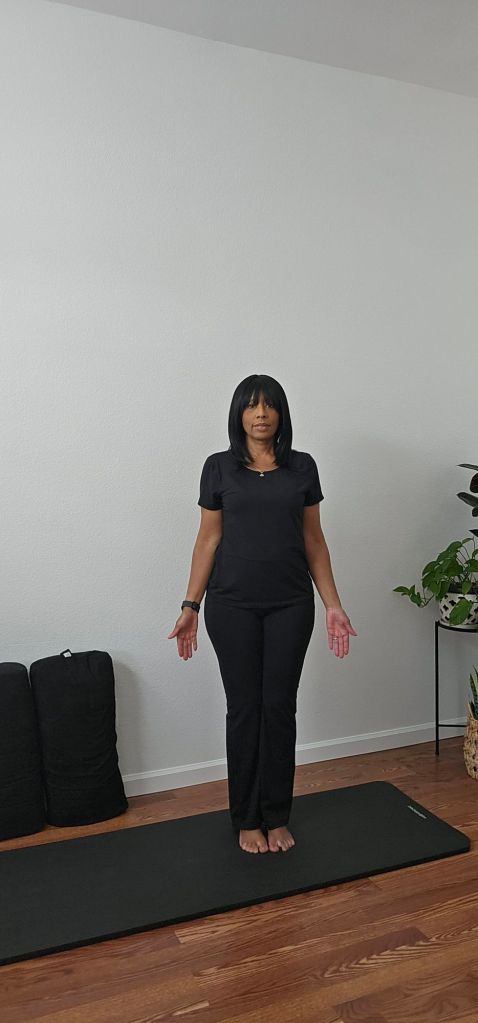
More than meets the eye, Tadasana, also known as “Mountain Pose,” is a foundational yoga posture that focuses on alignment, grounding, balance, breath awareness, and the flow of prana along the spine. A seemingly simple yoga asana, this pose, when practiced with intention, is a little more challenging than just standing,
In Sanskrit “Tada” refers to the word “mountain” and “Asana” refers to the word “posture” and when practicing Tadasana the qualities of a mountain, such as creating a strong foundation, stability and balance, are embodied by the practitioner.
This pose is also referred to as Samasthiti in the Ashtanga lineage with “Sama” meaning “equal” and “sthiti” meaning “standing still” in Sanskrit.
Frequently practiced as a neutral or transitional pose in between other poses in a yoga sequence, Tadasana allows the body to unite one pose to the next one that follows in a standing sequence with ease.
Some of the benefits of practicing this asana are that it helps improve posture by helping to align the spine, shoulders and pelvis. It can also help strengthen the core muscles as the abdominal muscles are engaged while practicing helping to stabilize the core muscles, as well as muscles in the lower back and lower body.
Tadasana also helps increase strength and stability in the legs, ankles and feet; benefitting balance and coordination as the muscles of the legs are engaged, assisting in the creation of a solid foundation. This pose can help elongate the spine and reduce disc compression when maintaining a straight back, lifting through the crown of the head and maintaining alignment in the body, thereby promoting spinal health, flexibility and improved posture. It can also help promote circulation and energy flow throughout the body, reduce and relieve tension in the shoulders, neck and upper back through the opening of the chest.
A few pose variations that are available for Tadasana include keeping the feet hip width apart, raising the arms, integrating eagle arms, lifting the heels, using a wall for support, and practicing Tadasana while seated in a chair or lying down.
Tadasana offers a rich opportunity for the inclusion of meditative engagement through the integration of breath awareness and inner observation. A subtle but satisfying benefit of this posture. Whether practiced as a part of a yoga sequence, or solely on its own, this pose provides yoga practitioners with a powerful tool for fostering internal and external strength and developing stability, presence, centeredness and discipline.
How to practice Tadasana
Stand up tall and broad.
Elongate the spine.
Place your feet and toes together evenly. Feet may be together with toes touching, slightly apart, or the feet may be hip width apart.
Gently rock your feet forward, backward and side to side to help evenly distribute your weight throughout all sides of your feet to help establish a firm base.
Ground or root yourself to the earth (or floor) and ensure that your body feels evenly balanced and comfortable.
Keep your hips facing forward.
Keep your thighs + knees facing forward.
Keep your ears over your shoulders.
Keep your chin aligned with your chest.
Keep the crown of the head lifted.
Maintain engagement of your core.
Keep your shoulders rolled back slightly and aligned with your hips.
Relax the shoulders.
Open the chest keeping the sternum lifted upward + the ribs soft
Extend your arms downward along both sides of your body,
Place the palms of your hands faced forward. (A few other variations include: placing the hands in Anjali Mudra or “prayer hands” at the chest, or arms raised above the head with fingers of the hands pointed upward.)
Keep your gaze forward at eye level.
Hold the pose for a few minutes.
Holding Tadasana for a few breaths, maintaining a steady gaze and allowing yourself to become aware of any sensations, and the effects of this posture before moving onto another one can serve as a way to invigorate and enrich your practice.
A short list of additional benefits of Tadasana include:
May be helpful for sciatica and lower back pain.
A short list of contraindications for Tadasana include:
Ankle or knee injury, ankle or knee surgery, knee osteoarthritis, and spinal surgery.
Be sure to check with your physician prior to practicing this pose. If you are able to practice this pose, try exploring different variations of the posture to better meet yourself where you are whenever you practice – whether that be to practice a gentler variation, or one that provides you with an opportunity to challenge yourself a little bit, if that is a part of your yoga journey.
Explore practices, reflections and guidance to support you on your yoga journey.
Elevate Your Salubrity + Nourish Your Soul Welcome A Journey of Self-Discovery
Begin Here
This blog was created with heart and intention. It is a sanctuary of words to support your journey back home to yourself. It is where gentle movement, mindful living, soul nourishment, and compassionate awareness come together in a sacred rhythm. A sacred rhythm that honors your body, your breath, and your becoming.
Whether you are exploring the foundations of yoga, learning to breathe with more awareness, or simply seeking quiet inspiration in the midst of a busy world — you are in the right place.
I hope that you find the contents within this blog helpful and valuable.
Welcoming every part of you.
Especially the parts that crave more presence, peace and purpose.
Prefer to listen instead?
You can also experience many of these writings in audio form on The Salubrity and Soul Yoga Podcast — to meet you in your daily rhythm. Press play while you walk, sip tea or rest and let your mind and soul absorb what it needs –when it needs it. Available on most podcast sites.
Let’s Stay Connected
Never miss a post. Subscribe to the blog below.
In Closing.
I would also like remind you that the Salubrity and Soul Yoga website still currently remains to be somewhat of a work in progress, therefore, I ask for your patience at this time, and over the next few months as the website continues to be updated. As a result, I invite you to check the website often for updated blog posts such as this, new classes, class dates and times and other pertinent information that may also be of interest or benefit to you.





 Salubrity + Soul Yoga